
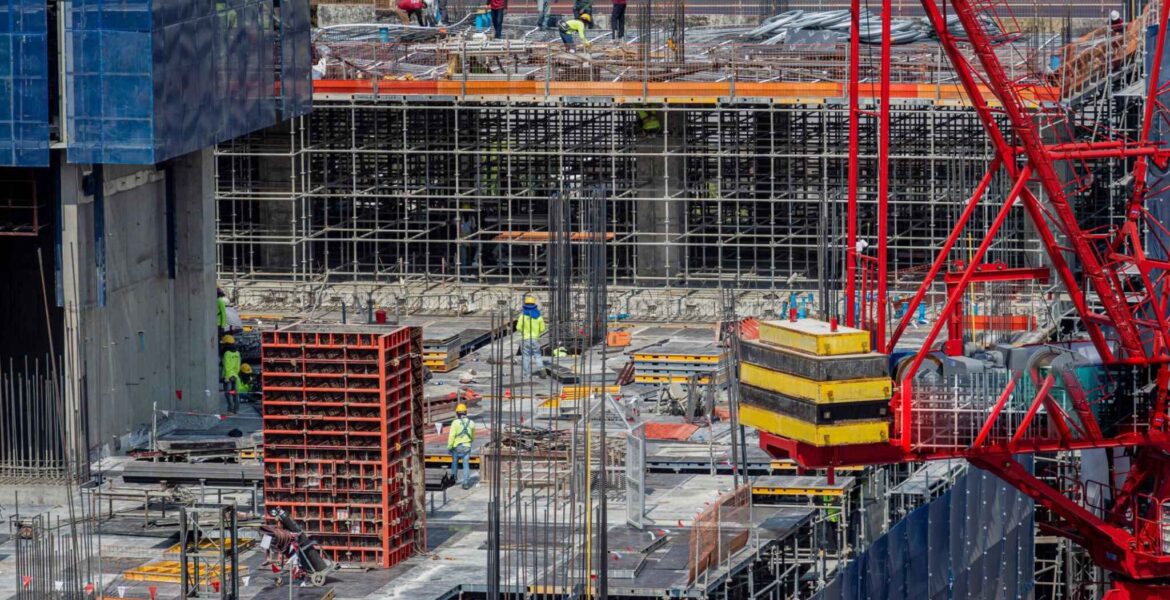
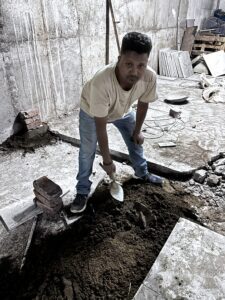
 At 9:30 in the morning, while much of the city is still settling into its rhythm of meetings, phone calls, and hurried commutes, Varinder Kumar is already at work. Bent over a stretch of flooring inside a rising commercial structure in Sector 75, Mohali, his hands move with practiced precision. One tile at a time, he shapes spaces that will soon house offices, shops, and businesses. These are places where transactions will unfold, careers will grow, and lives will intersect.
At 34, Varinder is not merely a construction worker. He is part of the invisible force that builds the commercial heartbeat of a city.
Originally from Bihar, Varinder began working at the age of 17. There was no elaborate plan and no carefully charted career path, only the pressing need to earn.
“Kaam karna tha,” he says simply. Work had to be done.
Fourteen to fifteen years later, that necessity has transformed into expertise.
Learning the Craft
Varinder specialises in tile, stone, and granite work, skills that demand far more than physical strength. There is a geometry to his work, a quiet mathematics of alignment, spacing, and symmetry. Each tile must sit perfectly, each joint must be precise, and the final finish must meet the expectations of commercial clients, where perfection is not optional.
Unlike residential spaces, commercial sites demand scale and speed. Large surface areas and tight deadlines leave little room for error.
“I learned by watching,” Varinder recalls. “Phir dheere dheere khud karna shuru kiya.”
There were mistakes in the beginning, as there always are. Over time, repetition turned into refinement, and his work evolved from labour into craftsmanship.
Today, he earns ₹1100 per day, a wage that reflects both his experience and the demand for skilled hands in commercial construction.
The Reality of Dihadi Work
Varinder works on a dihadi basis, which means his income depends on daily availability of work. There is no fixed salary, no guaranteed monthly income, and no structured benefits.
His current assignment in Sector 75, Mohali, is part of a commercial project, one of many he has worked on over the years. Like most workers in his field, he finds jobs through word of mouth.
“Log bata dete hain,” he says. Someone recommends, a contractor calls, and the cycle continues.
This informal network is both his lifeline and his limitation. It ensures opportunities, but it offers no security. A slowdown in construction, a project delay, or even bad weather can disrupt income instantly.
Still, he shows no visible anxiety. For Varinder, uncertainty is not an exception. It is routine.
A Day on Site
His workday runs from 9:30 AM to 5:30 PM, though the physical intensity often makes it feel longer. The tasks vary depending on the stage of construction. He cuts tiles, mixes adhesives, aligns stone slabs, and finishes surfaces.
Commercial sites come with their own pressures. Deadlines are tighter, supervisors are more demanding, and expectations are uncompromising. A minor misalignment in a showroom floor or an office lobby can lead to rework and lost time.
Yet, Varinder approaches each task with calm focus. Years of experience have taught him efficiency. His hands move quickly, but never carelessly.
There is a rhythm to his work. He measures, cuts, places, adjusts, and repeats. It is almost meditative, though physically exhausting.
Under the Open Sky
Construction work does not pause for weather. In the peak of North Indian summers, when temperatures rise relentlessly, the site becomes even more challenging.
When asked how he manages the heat, Varinder shrugs lightly.
“Ab aadat ho gayi hai.”
It is a statement that reflects both adaptation and quiet endurance. The body learns to cope, but the strain remains.
There are no air-conditioned workspaces. Shade is temporary, breaks are brief, and the sun remains constant. Dust, sweat, and fatigue become part of the day.
Still, the work continues.
Family as the Foundation
Beyond the construction site lies the real purpose behind Varinder’s daily effort, his family.
He is a father of three. Two of his children are studying, and the youngest is still small.
“Unko padhana hai,” he says, with quiet determination.
Education, for Varinder, represents possibility. It is the one thing he hopes will change the course of his children’s lives. Where his journey began with labour, he hopes theirs will begin with opportunity.
The ₹1100 he earns each day must stretch across household expenses, school fees, and daily needs. It is a careful balancing act.
“Bachon ke liye hi toh sab karte hain.”
Everything is for the children.
Building Spaces, He May Never Use
There is a quiet irony in Varinder’s work. Every day, he helps construct commercial spaces, polished offices, expansive showrooms, and modern business hubs. These are places designed for comfort, productivity, and profit.
Yet, he remains outside the world he helps build.
He may never work in those offices or experience those spaces as they are intended. His role is essential, yet invisible.
The floors he lays will carry countless footsteps, but none will know his name.
Skill Without Recognition
Construction labour is often underestimated, but Varinder’s work tells a different story. Tile and stone work require accuracy, patience, and deep understanding of materials.
A slight miscalculation can disrupt an entire surface. A poor finish can reduce the value of a commercial property.
“I like my work,” he says quietly.
It is not a statement of passion in the conventional sense, but one of acceptance and pride. In a profession shaped by necessity, even that holds meaning.
The Uncertain Future
Despite years of experience, Varinder’s profession offers little long-term security. There are no retirement plans, no health benefits, and no guarantees.
Injury or illness can disrupt everything.
When asked about the future, he responds simply.
“Dekhenge.”
For now, the focus remains on the present. He works, he earns, and he provides.
A Story That Reflects Many
Varinder Kumar’s life is not extraordinary in the traditional sense, and that is precisely why it matters. His story reflects the reality of countless migrant workers across India.
From Bihar to Mohali, his journey mirrors a larger movement driven by necessity and sustained by resilience.
These workers build cities and support economies, yet their stories often remain unheard.
The Close of Day
By 5:30 in the evening, the workday comes to a close. Tools are set aside, surfaces are left to settle, and the site begins to quieten.
For Varinder, it is the end of one day and the beginning of another cycle.
Tomorrow will look much the same.
An Ongoing Story
Varinder Kumar does not build for recognition. He builds because he must. He builds because his family depends on it. He builds because it has become his life.
The commercial spaces he works on will soon come alive with activity and ambition. People will walk across the floors he has laid without a second thought.
Yet, in the quiet dignity of his labour, there is a story that deserves attention.
It is a story of persistence, responsibility, and resilience.
A story of showing up every day and building a life, one tile at a time.