
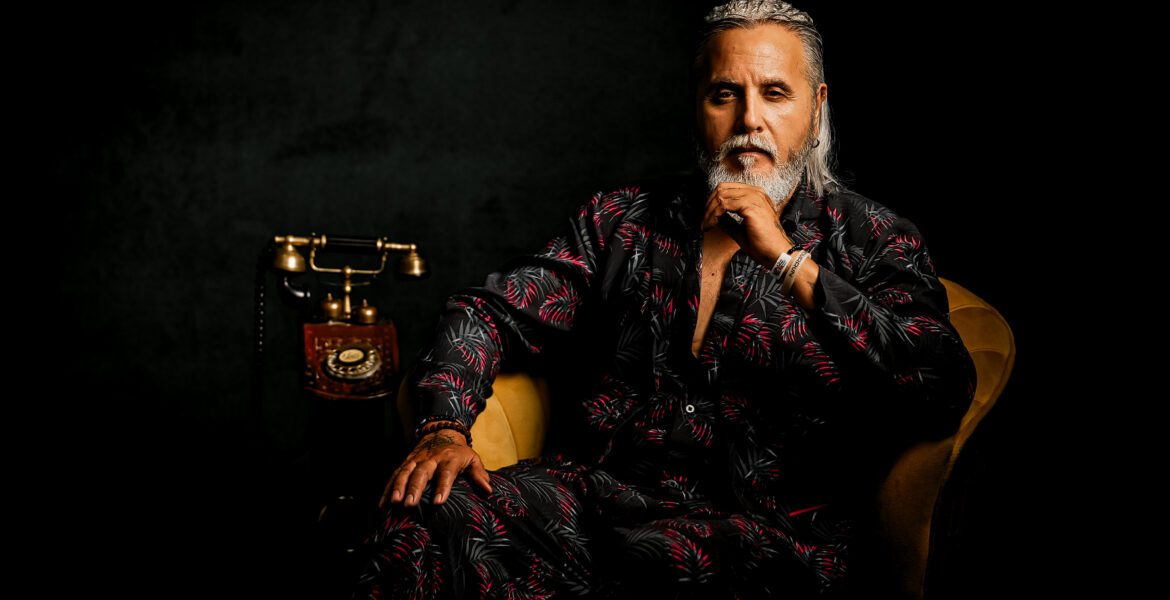
The Ageless Ascent of Dinesh Mohan from Rock Bottom to Runways
In a world that celebrates youthful glamour and fast fame, Dinesh Mohan stands as a rare, unwavering force—a man who didn’t just break into the modelling world in his 50s but redefined it with grace, grit, and silver-streaked style. His story isn’t about overnight success or viral moments. It’s about resurrection.
Once confined to a bed, battling clinical depression and the weight of profound personal loss, Dinesh’s journey is a deeply human one, marked by vulnerability, inner war, and, eventually, transformation. Today, he is not just a model or an actor; he is a symbol of what’s possible when one dares to rebuild life from its ruins.
In this heartfelt conversation with Manokriti Bedi from Manifest International Magazine, Dinesh opens up about the darkest chapters of his past, the power of self-discipline, the illusion of social media, ageing in a youth-obsessed industry, and what success means when the cameras stop rolling. What unfolds is not just an interview—it’s a powerful reflection on healing, hope, and second chances.
Dinesh, many people know you today as a celebrated face in fashion, but very few know about your darker past. Could you take us back to where it all began?
For nearly 14 years, I was stuck in a zone that I never imagined I’d survive. I was mostly bedridden, heavily medicated, and mentally withdrawn. Life had lost its meaning—I gave up entirely. My days blended into nights in a room full of silence, pain, and pills. And yes, suicidal thoughts were frequent visitors. It was one of the lowest, most isolated phases of my life.
Who was your support system during this time?
My sister and brother-in-law were everything to me. I was staying alone in Chandigarh, but when things got really bad, they brought me to Gurgaon. That move changed everything. I was too unwell to be alone. In Gurgaon, all my physical needs were taken care of—there was food, help at home, a comfortable space—but emotionally, I was sinking deeper. My depression only intensified because I had nothing to do, nothing to look forward to.
Was there a specific turning point that pulled you out of that darkness?
Yes, my brother-in-law. He wasn’t just family—he was a close friend. He couldn’t bear to see me like that and began pushing me, encouraging me, even scolding me. That relentless support made me take the first step. I decided to go on a diet—not for looks, but because the doctors said my weight was worsening all my illnesses. Over nine months, I lost 45 kilos through a strict holistic diet. That moment, that change, sparked something in me. I realised: if I can do this, I can do anything.
Did you also start working out during that period?
The workouts came much later. I lost 45 kgs purely through diet. But once the weight was gone, my body had loose skin. That’s when I joined a gym, took up swimming, and began physiotherapy—because I couldn’t walk properly either. It was through my physiotherapist that I got introduced to the modelling world. His father ran a modelling agency, and he said, “You have a look. Why don’t you try?” I went for an audition in Delhi, and they selected me immediately.
What was the beginning of your iconic bearded look?
Funny story—this beard wasn’t always a part of me. I grew it out for a shoot with an Italian company at a water park in Gurgaon. They asked me to grow facial hair for that one project. But the beard ended up becoming my signature. It grew on me—literally and metaphorically. Today, my whole persona is built on the grey-beard, silver-haired look, and it has brought me thousands of shoots and major fashion walks.
Looking back, when did you realise that what you were going through was clinical depression?
It took about two years of extreme emotional instability. I’d be fine in the morning, crying by afternoon, and numb by night. I realised this wasn’t normal and finally sought professional help. I was diagnosed with clinical depression in an advanced stage. It was a long, exhausting fight—failing, trying again, failing again—until that tiny inner spark grew strong enough to carry me forward.
Do you feel that your weight loss was also a journey back to self-love?
Absolutely. My self-love began the moment I decided to lose the weight. Not even the results—just the decision. It was the first time in years I had chosen myself.
Is it okay if I ask about your love life?
It’s missing. I was married once. I’m a widower. That loss was a significant reason for my breakdown. And though I’m open to love, I’m also realistic. When you’re in the public eye, it’s hard to find someone who wants you and not your status. There’s a lot of selfishness in the industry. Everyone has an agenda—money, fame, roles, exposure. So, I’ve made peace with being single.
How do you handle criticism, especially the kind that comes from social media?
Most of what’s said online isn’t real criticism—it’s noise. That said, yes, even if we try to ignore it, negative comments tend to stick. A compliment comes and goes, but a harsh word stays. But I’ve learned to filter it. If the comment comes from someone genuine or close, I reflect on it. Otherwise, I move on. There’s too much jealousy online to take it personally. Someone even questioned my age online, insisting I must be 80! I replied, “Mama, you must know my date of birth better than I do,” and that was that.
You’ve often spoken about ‘rebirth’. Do you believe in past lives and karma?
I do. I’ve undergone past life regression therapy myself and discovered that I’m highly intuitive, almost clairvoyant. My therapist encouraged me to take it further, so I did a professional course in California and became a certified hypnotist. I practised for a year, but modelling and acting took over. As for karma, I don’t see it as reward and punishment. It’s about the return of energy. If you hurt someone, it will come back to you—maybe not today, not even in this lifetime, but it will. The lesson will return until it’s learned.
In a world obsessed with youth, you’ve become a symbol of ageless rebellion. What do young people misunderstand most about ageing?
That they’ll never age. It’s the biggest illusion. They think old age is something that happens to others. They forget it’s a privilege to grow old.
When did you realise that your new life had truly begun?
It was around the age of 53 when my brother-in-law told me, “You can’t live like this anymore.” It hit me hard. He had always been there for me, and I couldn’t keep hurting him with my passivity. That moment, I knew I had to change—not just for myself, but for him.
You have a massive presence online and in fashion—how do you stay grounded?
It’s the visibility that keeps me grounded. I was invisible for years. And now, when someone approaches me with tears in their eyes, just for being able to see me in person, that keeps me humble. It reminds me of how far I’ve come.
What does success look like to you now, when no one’s watching?
It looks the same. Success isn’t fame or money to me. It’s the ability to get up, get dressed, and do what I love. Paid or unpaid. Photographed or not. As long as I’m creating, I’m fulfilled.
If you could speak to the version of you who had given up, what would you say? And what would he say back?
I’d say, “Relax. Trust life.” And I’d hope he says, “Yes, I will.” For a long time, I said no to life. Now I say yes, every single day.
In order, how would you rank success, love, money, and power?
Success comes first. Then power, money, and lastly, love. If you’re successful, the rest follows. Including love—if it’s real.
You entered the fashion world at 57. What’s your take on fashion today?
Fashion should be crazy, free, and expressive. I don’t dress to shock—I dress to feel alive. Comfort is key, but if the budget’s right, being self-conscious is okay too! I just believe people my age can wear what they want and enjoy it fully.
Lastly, what’s your message for budding models and content creators who look up to you?
Believe in yourself, but also build something real before you start broadcasting it. Everyone calls themselves a model these days—even if they spell it M-O-D-A-L. But fashion is an art. So dress loud, live louder, but work even harder.
Because some stories don’t age—they evolve.