
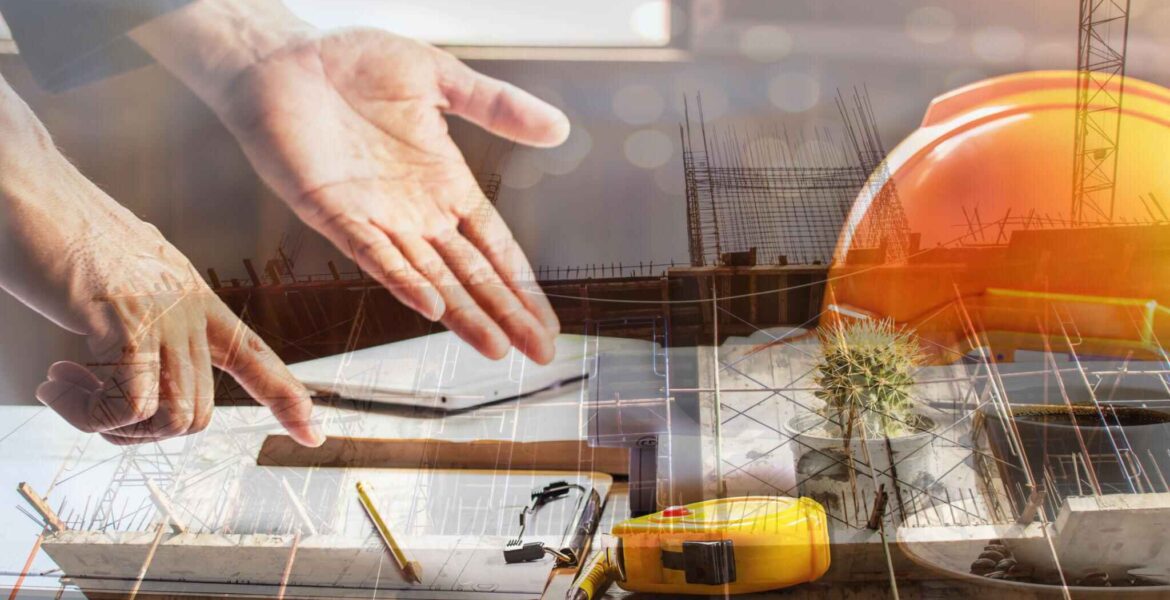
The Silent Dialogue Between Architect and Labour
Every line I draw is, in essence, a promise. It is an abstract commitment extended to hands I may never shake, to bodies I may never encounter, yet whose labour will ultimately translate my intent into inhabitable reality. The drawing leaves my table immaculate, precise, and annotated with the quiet confidence of authorship. It travels, unwrinkled and assured, into the unpredictability of the construction site, where its authority is both respected and subtly renegotiated. There, a mason reads it much like a seasoned musician reads a complex score. Fluently, interpretively, and instinctively, they fill in silences with a depth of knowledge no drawing, however meticulous, can fully encode.
In that translation, something is inevitably lost. Yet something, often far more profound, is gained.
Between the drafting table and the scaffold exists a conversation architecture seldom acknowledges, let alone celebrates. It is a dialogue not conducted in formal meetings or documented exchanges, but in gestures, instincts, approximations, and decisions made under the open sky. It is a meeting of two distinct intelligences. One is codified in drawings, calculations, and digital precision. The other is embodied in muscle memory, tactile familiarity, and lived experience. One resides on paper. The other resides in the body.
The building that eventually stands, solid and resolved, belongs equally to both. Yet the narrative of authorship remains conspicuously uneven. One name is inscribed, cited, and remembered. The other dissolves into anonymity, absorbed quite literally into the walls it helped raise.
The labourer on site is, in many ways, the first reader of our architectural fiction. For that is what drawings are. They are projections of intention, speculative constructs awaiting realisation. They are, despite their technical rigour, incomplete. It is the labourer who confronts their ambiguities, negotiates their impracticalities, and resolves their silences.
The experienced mason, the intuitive carpenter, the pragmatic site supervisor, the resourceful MEP contractor. These individuals operate not merely as executors, but as interpreters and, often, as editors. Like all good editors, they are generous. They do not simply follow instructions. They refine them. They identify inefficiencies that escape the drawing board, devise solutions that were not anticipated, and recalibrate details to suit the contingencies of material, climate, and circumstance.
Rarely do they call to seek permission for every deviation. Not out of disregard, but out of an acute awareness of the ecosystem within which construction unfolds. They understand that architects operate under multiple pressures, balancing timelines, clients, and competing projects. So they adapt. Quietly, efficiently, and intelligently.
More often than we care to admit, the building is better for it.
This silent collaboration exists within a hierarchy that seldom credits it. Architecture as a discipline has long privileged the idea over its execution, the concept over its construction. The architect is positioned as the originator, the visionary, the one who conceives. The labourer, by contrast, is framed as the one who merely implements.
This dichotomy is both reductive and deeply flawed.
To build is not a passive act. It is an act of constant decision making. Materials behave unpredictably. Site conditions shift. Drawings encounter realities they could not foresee. In these moments, it is not distant authorship that resolves the issue, but immediate intelligence. A slight adjustment in alignment, a substitution of technique, a rethinking of sequence. These are not acts of obedience. They are acts of authorship in their own right.
There is embedded within the labouring body a form of knowledge that is deeply empirical and profoundly sophisticated. It is knowledge accumulated over years of repetition, error, adaptation, and intuition. It cannot be easily documented or neatly transferred into drawings. It resists codification. Perhaps that is precisely why it remains undervalued.
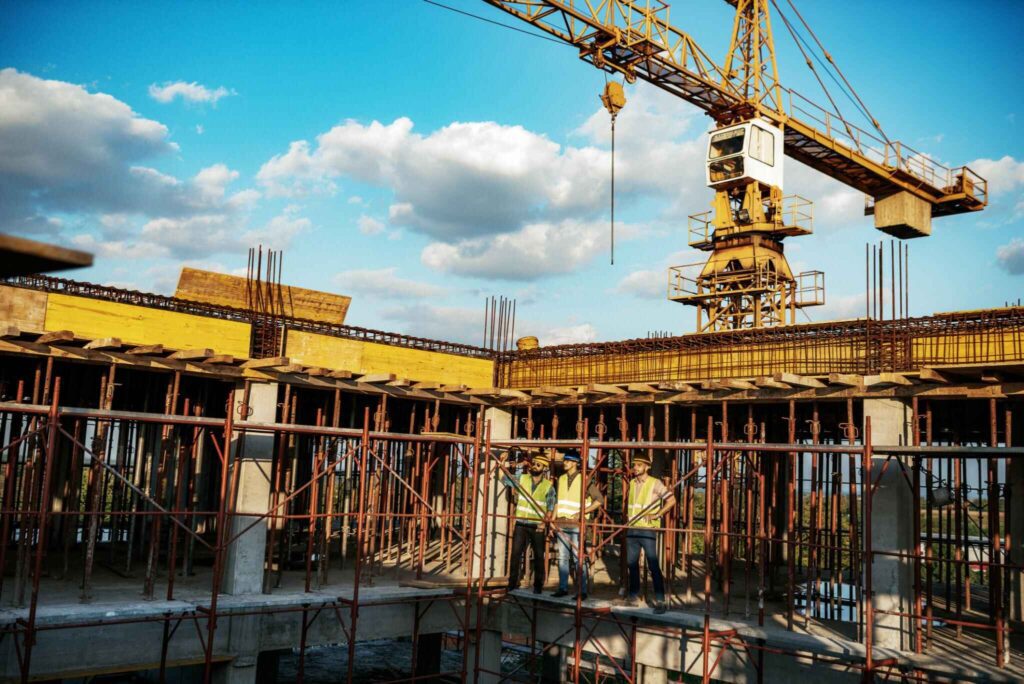
The architect, armed with software, theory, and representation, operates within a realm of abstraction. The labourer operates within a realm of consequence. For the architect, a line can be redrawn. For the labourer, a mistake has weight, cost, and permanence.
Yet despite this imbalance, there exists a quiet dignity in the way labour engages with architecture. There is pride in execution, even when recognition is absent. There is ownership, even without attribution.
Walk through any construction site and this dialogue reveals itself in real time. A mason adjusts the proportion of mortar with an instinct refined over decades. A carpenter improvises a joint to accommodate an unforeseen misalignment. A contractor reconfigures services to navigate structural constraints. These are not deviations from the design. They are continuations of it, extensions of intent shaped by reality.
Still, when the building is complete, when the photographs are taken and accolades distributed, this layer of contribution remains largely invisible.
The labourer disappears into the architecture they helped create.
This erasure is not always intentional, but it is undeniably systemic. It is embedded in the way projects are documented, in the narratives we construct, and in the language we use. We speak of our buildings, our designs, our projects. Rarely do we pause to interrogate who that collective truly includes, and more importantly, who it excludes.
To acknowledge labour is not to diminish the role of the architect. It is to expand the definition of authorship. It is to recognise that architecture is not a solitary act of creation, but a collective process of negotiation, interpretation, and realisation.
It requires a shift not only in credit, but in perspective.
What if drawings were seen not as definitive instructions, but as invitations for collaboration. What if the construction site was approached not as a place of control, but as a space of learning. What if labour was engaged not as a subordinate force, but as a co creator.
Such a shift would not only be ethically necessary. It would be architecturally enriching.
Within this exchange lies the possibility of better buildings. Buildings that are not only conceptually strong, but materially intelligent. Buildings that respond not just to design intent, but to the wisdom of those who bring them into being.
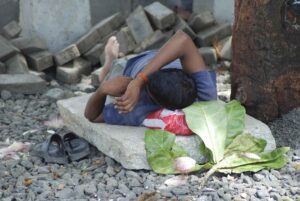 There is a certain humility required in accepting this. A willingness to relinquish absolute control. A recognition that the architect does not, and cannot, know everything.
Perhaps that is where architecture becomes most meaningful.
Not in the perfection of a drawing, but in its translation. Not in the authority of authorship, but in the generosity of collaboration.
Every line drawn is indeed a promise. But it is a promise that can only be fulfilled through another’s hands.
It is time those hands were no longer invisible, but recognised as integral voices in the making of architecture.
By
Ar. Amit Dutta