
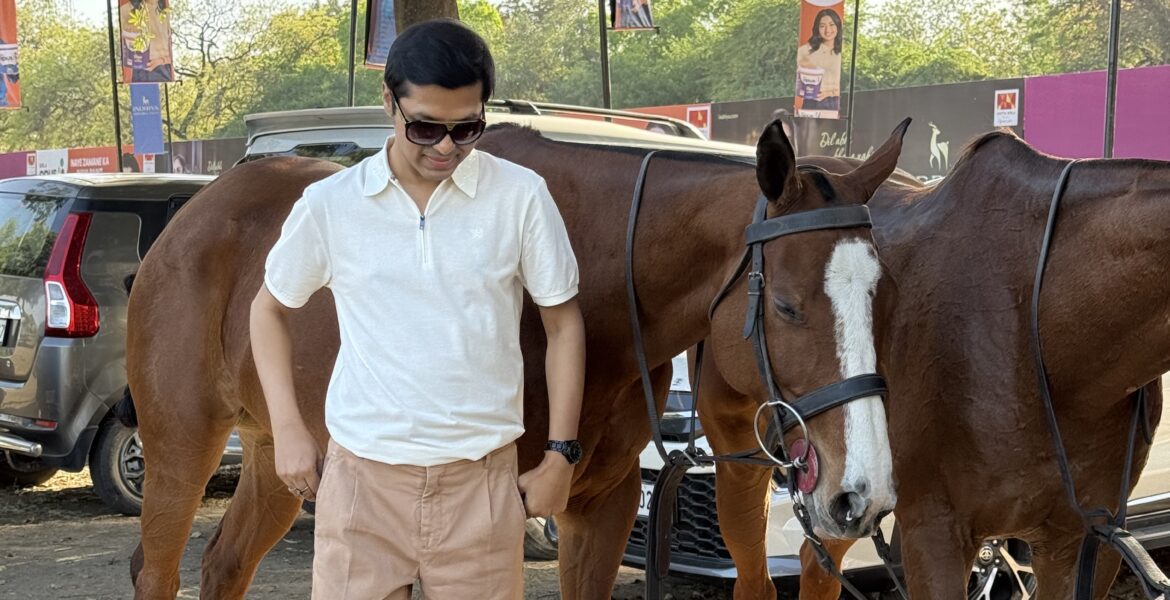
What begins as a career in PR often stays buttoned-up and behind the velvet rope. But for Anker, it became a lifelong gateway to something far more expansive—a life rooted in storytelling, style, soulful expression, and unapologetic truth. With nearly two decades spent shaping the glitziest corners of fashion, hospitality, and luxury events, he now stands firmly at the intersection of creativity and candour. Through Pepper Diaries, his fashion-forward collaboration with @axalabel, and a growing reputation as the industry’s unfiltered conscience, Anker curates far more than aesthetics—he creates atmospheres, tells unspoken stories, and reminds us that beauty is often found in what’s broken, brave, and boldly real.
Let’s start with your journey—what inspired you to launch a multifaceted creative life that spans Pepper Diaries, curating with @axalabel, fashion, travel, and event guest-listing? How did it all begin?
None of this was part of a grand plan—it was more like following the scent of what felt right at every turn. I spent close to 18 years in the world of PR, working with some of India’s finest agencies and under the mentorship of some of the most visionary minds in the business. During those years, I handled everything from luxury hotels, fashion weeks, restaurants, and international brands to art galleries, socialites, and legacy jewellers. We were the silent force behind some of the most glamorous launches and headlines—back when “Page 3” was a cultural moment in itself.
Guest-listing, in many ways, has always been part of my DNA. In PR, we curated guest lists for every major event—designers, editors, choreographers, influencers, models, and royalty. But I was always behind the scenes, never the face. That changed with Pepper Diaries. What started as a creative outlet soon became a recognisable identity, and over time, guest-listing took on a new form, where I was not just curating, but also hosting.
Suddenly, people were coming to me, and I realised how naturally it fit. I love connecting with people, I get along easily, and I know how to read a room—that’s been my secret ingredient.
Fashion, on the other hand, has always been a silent love affair. I’ve always styled myself with intention, with detail, with that little something extra. I had the eye, but never the technical know-how. That changed when, through a mutual friend, I met my current partner, Shilpi Narang, at AxA Label—someone who’s been in fashion for 20 years.
Our aesthetics clicked instantly, and together we birthed a menswear line that reflects both craftsmanship and creative expression. Two years later, it’s been nothing short of beautiful. Whether it’s a curated guest list, a well-fitted ensemble, or a city I’m discovering, everything I do today stems from years of learning how to spot beauty, build relationships, and turn moments into stories.
This Father’s Day, you shared a heartfelt post about your father’s struggle to understand your identity as a gay man. How has that relationship evolved, and what impact did it have on your journey of self-acceptance and creative freedom?
The Father’s Day post was one of the hardest things I’ve ever written, because it wasn’t just about celebrating a parent—it was about acknowledging a deep emotional fracture that shaped me.
The truth is, the conflict between my father and me was never just about my sexuality. It was about something even more nuanced—mannerism. He couldn’t understand why his son didn’t behave like the boys he knew. I was expressive, soft, scared, and an introvert, which didn’t fit into the mould of what a “man” should be, in his eyes.
But for me, it wasn’t an act. It was how I was. I didn’t even know I was “different” until the world told me I was. I don’t blame him. I genuinely think he didn’t have the tools or the language to deal with it. He came from a generation where masculinity was narrowly defined, and there was no handbook on how to raise a child who coloured outside those lines.
Over time, the relationship faded—my parents separated, and I’m no longer in touch with him. But that distance also gave me room to grow without constantly seeking validation from someone who couldn’t give it. It taught me resilience. It pushed me to create a life where I could be seen fully—through my work, my expression, and my community.
In a strange way, that very rejection helped me build the creative freedom I live with today. Because when you learn to accept yourself without applause, you start creating not for approval, but for truth. And that’s been my biggest liberation.
Your Instagram stories are hilariously sharp when you expose influencers who attend events just for freebies. What sparked that witty exposé streak, and how do people typically react, especially those called out?
Blame it on my many years in PR! After nearly two decades in the industry, you develop a sixth sense for spotting the theatre behind the glitter. I’ve seen it all—ultra-rich people refusing to pay for parking, someone pocketing gift bags like they’re rare art, or attendees more concerned with their +1’s outfit than the actual event. And the best part? I was always the silent spectator. Watching. Noting. Storing the drama for later.
I think I just have a slightly wicked sense of humour and a highly trained eye for absurdity. And honestly, once I transitioned from being behind the scenes to being in the middle of these so-called influencer parties, the comedy practically wrote itself. I started noticing patterns—people arriving early just to leave with a goodie bag, pretending to know brands they can’t pronounce. It was too good not to share.
But my intent has never been to be mean—it’s to hold up a mirror. I find that humour is the best way to say serious things without sounding preachy. And surprisingly, most people love it. They laugh, they relate, and some even DM me their own horror stories.
A few get offended, of course—but if the shoe fits…
At the end of the day, I think the industry needs a little self-awareness. If we can’t laugh at ourselves, are we even influencing, right?
Your bio mentions finding comfort in “old, broken, abandoned” places—how do you bring that poetic aesthetic into both your pepper-growing on Pepper Diaries and your curated events?
Sometimes I feel like I was born in the wrong century! I romanticise the 1930s—the slow life, the handwritten letters, the oil lamps, the long silences, and the louder emotions.
There’s a strange comfort I find in things that are old, broken, or abandoned… not because they’re lost, but because they’ve felt more than most people ever will.
I grew up in a joint family in an old house in Old Delhi, with the scent of gobindo bhog rice always lingering in the kitchen and the voices of my Bengali grandparents echoing through the walls. They raised me with poetry, Tagore, traditions, and the beauty of small things—like the way someone folds a sari or the way a mango is sliced.
Even now, I live in a joint family, and I hold onto those values like heirlooms. So when I grow pepper or curate an event, I don’t just create—I observe. I slow down. I let memory, emotion, and atmosphere seep in.
Whether it’s a table setup that reminds you of your naani’s verandah or a plant growing beside an old brass diya—I try to weave in that soulful, weathered charm. Because beauty doesn’t have to be shiny. Sometimes, it’s chipped, faded, and full of stories.
As co-founder of @axalabel, how do you balance commercial collaborations and influencer culture with your desire for authenticity and meaningful storytelling?
That’s a thoughtful question—and honestly, it’s a tightrope I walk every day. As co-founder of AxA Label, I’m deeply invested in storytelling that feels personal, rooted, and honest.
But I also understand the commercial realities of the digital world. Collaborations and influencer culture are part of the ecosystem we work in, but for me, the key is intention. I don’t believe commerce and authenticity have to be at odds.
I try to partner with brands and people who align with my values—who understand that storytelling isn’t just a marketing tool, it’s a way of life. Whether it’s designing a piece for AxA or curating a post, I always ask: Does this feel true? Does this add something meaningful to the narrative I’m building? Ultimately, it’s about creating work that doesn’t just sell, but resonates. That lingers. That reminds people of something deeper.
If I can balance both worlds without compromising that essence, I feel like I’m doing my job right.
On Pepper Diaries, you experiment with chilli-growing and homemade sauces. Do those fiery pursuits serve as a metaphor for calling out performative behaviour in events or society at large?
Well, while the chillies might be fiery in the kitchen, I do believe it’s just as important to bring that same fire into everyday life as a citizen.
For me, having a voice—no matter the size of your platform—comes with responsibility. Whether it’s about something broken in the system, issues in our industry, or just general apathy, I believe in staying aware and speaking up.
I always try to stay tuned in to current affairs and industry developments, and if something feels wrong, I won’t stay quiet. Equally, when something is done well, I make it a point to applaud it—because that too sets a benchmark.
At the end of the day, it’s about creating a culture of accountability and encouragement. Because if we want more thoughtful people to join our industry and our spaces, they should walk in knowing that being stylish and being responsible aren’t mutually exclusive.
Have you had any moments where someone seemingly superficial—an influencer or guest—surprised you by being genuinely engaged or vulnerable? Any stories of redemption?
Absolutely—and I’ll be honest, this one story stayed with me.
At one of my early events, I noticed this one influencer. On the surface, she seemed like just another glossy face in the crowd—picture-perfect, sipping her drink. But something felt off. I don’t know if it was instinct or the old-school upbringing in a joint family where you learn to observe people, but I walked up and gently asked if she was okay. She looked at me, paused, and then just broke down. Turns out, she was going through domestic abuse at home.
She said she’d almost skipped the event, but came because she needed the escape, the joy, the distraction. It hit me so hard. I asked her if she wanted to leave, if I should call someone or drop her back. But she just said, “No—I want to be here. I want to feel like myself again, even if it’s just for tonight.”
That moment changed how I see my job. I realised that I don’t just throw events or curate aesthetics—I hold space for people. I never know who’s walking in and what they’re carrying. So I make it a point to welcome everyone like family. I track how they’re doing, check in on them, and follow up after. It’s never just transactional.
It’s about building a circle of care, where someone might walk in with their burdens but walk out feeling a little lighter.
Looking forward, what should we expect next on Pepper Diaries and @axalabel? Whether it’s a rare pepper you’re trialling, a candid LGBTQ+ conversation, or an unconventional event format, what should your audience be excited for?
So, what’s coming up? Style. Stories. Shakti. And a lot of spice.
This year on Pepper Diaries and @axalabel, expect a beautifully chaotic mix, just like me!
I’m focused on growing the label with fresh drops that blur the lines between comfort, heritage, and high style. There are also a few unconventional, heart-first events brewing—think fewer red carpets, more soulful, more real.
And yes, a podcast might just be on the way—unfiltered, deeply candid, and in true pepper style… where humour meets honesty, and nothing is off the table (except maybe bland opinions).
Also, a side not-so-secret: I’m a deeply spiritual person. I’ve been wanting to open up that part of my life too, so I’m planning to start a separate page or series that brings together my love for ritual, devotion, old-school faith, and daily moments of surrender.