

 Over the past few decades, the number of motor vehicles across India has increased dramatically. Families that once owned a single scooter or bicycle now own multiple cars and two-wheelers. While this rise in vehicle ownership has undoubtedly improved convenience and mobility, it has also created one of the most overlooked crises in urban residential living which is ‘PARKING’.
Across cities, parking disputes have become increasingly common inside residential societies, narrow streets, and gated communities. Inadequate parking spaces, poorly planned vehicular circulation, blocked entry points, basement congestion, and unauthorized parking have transformed what should have been organized living environments into daily sources of stress and conflict.
What is even more alarming is that parking disputes are no longer limited to arguments. In several cases across India, they have escalated into violence and even death?
In February this year, in Sonepat, a young national-level powerlifting champion named Vansh lost his life during a parking-related altercation. Reports stated that Vansh had parked his motorcycle outside a friend’s house when a dispute broke out with a car owner named Kuldeep. The argument escalated violently, and Vansh was shot dead on the spot. In another incident in Sector 77, Mohali, a government employee allegedly fired shots into the air after a heated argument with his neighbour over car parking. Similar incidents have also been reported from housing societies in Punjab and other urban centres where parking disputes have turned aggressive.
These incidents reveal a disturbing reality about modern urban housing. Poor parking infrastructure is not merely an inconvenience. It has become a serious social and safety concern.
As residential spaces become denser and vehicle ownership continues to rise, parking management can no longer remain an afterthought in urban planning. Poorly designed parking systems not only create conflicts among residents but also obstruct emergency movement, increase congestion, and compromise overall safety inside residential communities.
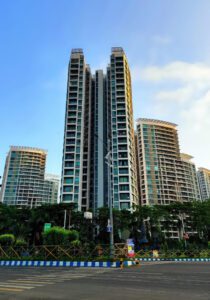
This is where projects like Opus One by GB Realty reflect a far more evolved and responsible approach toward urban living. The project understands that providing luxury with mindful living, where resident comfort, organized infrastructure, safety, and seamless movement within the community become equally important.
India’s urban skyline is changing rapidly. Towering residential projects, gated communities with numerous aesthetic and appealing offers and amenities have become symbols of aspirational living. Developers compete aggressively to offer bigger promises, better aesthetics, and more extravagant lifestyles. However, amid this race toward visual luxury, one critical question continues to haunt urban India, ‘Are our homes truly safe’?
A home is not merely a physical structure built with cement, glass, and steel. It is an emotional investment. It is where families sleep peacefully, where children grow up, where elderly parents seek comfort, and where residents expect protection from the chaos of the outside world. Yet, over the years, multiple incidents across India have shattered this expectation and exposed how negligence, poor planning, weak infrastructure management, and lack of accountability can transform residential societies into dangerous spaces.
Recent tragedies involving lift accidents, waterlogging electrocutions, residential fires, and parking-related conflicts have highlighted the urgent need for developers to rethink the meaning of premium housing. Luxury today cannot only be about imported marble flooring or expensive amenities. True luxury lies in safety, preparedness, intelligent infrastructure, and responsible planning.
The Indian real estate industry is now entering a phase where developers can no longer afford to treat safety as a secondary feature. It has become the foundation upon which the trust is built and expected to be carried with the same faith.
The tragic death of 33-year-old Dinesh Surange in December 2025 remains one of the most disturbing reminders of how negligence within residential societies can lead to irreversible loss. The incident took place at a Housing Society, when the resident became trapped inside a malfunctioning lift. During rescue efforts, the lift cable snapped and the elevator plunged from the seventh floor, critically injuring him and eventually leading to his death. Police later registered a case against housing society members, including the chairman, secretary, and individuals associated with the private lift maintenance agency. The incident exposed serious concerns regarding maintenance standards, safety audits, and operational negligence within residential complexes.
For many residents living in high-rise buildings, elevators are used several times each day without a second thought. However, lifts are among the most critical mechanical systems in any vertical housing project. A single failure can prove fatal, and the above quoted tragedy was not merely an accident but it was a warning. It raised uncomfortable but necessary questions about how frequently elevators are audited, whether maintenance agencies are properly monitored, whether emergency systems are regularly tested, and whether societies prioritize preventive maintenance or merely react after breakdowns occur.
The unfortunate reality is that many residential projects focus heavily on construction and sales while long-term infrastructure safety receives inadequate attention. Residents often assume that if a building appears luxurious, it must also be safe. Unfortunately, appearances can be deceptive and this is why developers like GB Realty are increasingly emphasizing infrastructure reliability as an essential part of modern housing. At Opus One, the approach toward vertical mobility reflects the understanding that elevators are not merely conveniences but life-critical systems requiring advanced engineering, regular maintenance protocols, and operational reliability.
In responsible developments, lift systems are integrated with emergency communication mechanisms, backup power support, fail-safe technologies, and rigorous maintenance standards. The goal is not simply smooth movement between floors. The goal is uninterrupted safety.
Another deeply tragic incident that shook public consciousness involved the death of 41-year-old textile executive Saroj Kant Das at Indirapuram. During heavy rainfall, neglected electric wires in the waterlogged compound of the housing society led to his electrocution. The incident occurred after Das returned home while attempting to drop his five-year-old daughter back from the school bus stop due to severe rains. As he stepped into the flooded society compound, he came into contact with an electrified area near the park entrance. Neighbours who attempted to rescue him reportedly experienced electric shocks themselves before the power supply was finally switched off.
The incident once again highlighted how poorly planned residential infrastructure can become deadly during extreme weather conditions. Every monsoon, Indian cities witness waterlogged roads, flooded basements, overflowing drains, and exposed electrical systems. Unfortunately, many residential societies remain unprepared despite knowing the recurring risks associated with heavy rainfall.
Waterlogging is not merely a seasonal inconvenience rather it is a serious infrastructure failure. Improper drainage systems, poor grading, insufficient stormwater management, exposed electrical wiring, weak waterproofing, and lack of preventive engineering create conditions where ordinary rainfall can escalate into life-threatening situations.
At Opus One by GB Realty, infrastructure planning reflects the understanding that environmental preparedness is essential to resident safety. Efficient drainage systems, protected electrical networks, water management strategies, and structurally planned layouts help minimize the risks associated with water accumulation and electrical exposure.
Among all residential disasters, fire accidents are perhaps the most terrifying because of how rapidly they escalate. One of the most heartbreaking examples occurred at Navi Mumbai’s housing society during Diwali celebrations where a massive fire reportedly triggered by a short circuit spread across the tenth, eleventh, and twelfth floors of the building, killing four people including a six-year-old child.
The tragedy once again exposed serious concerns regarding fire preparedness in high-rise residential buildings. In many housing projects, fire safety systems exist merely to satisfy regulatory compliance. Fire extinguishers are installed but rarely inspected, emergency exits are blocked, evacuation protocols remain unclear, residents are unfamiliar with emergency response procedures, electrical systems are overloaded, and fire drills are almost non-existent.
Modern residential developments cannot afford such complacency. Fire safety must be integrated into every stage of planning, engineering, construction, and operations. This includes advanced smoke detection systems, fire-resistant materials, automatic sprinkler systems, pressurized escape staircases, strategically designed evacuation routes, emergency access points for fire personnel, backup power systems, and routine safety inspections.
At Opus One, safety infrastructure reflects an understanding that prevention is more valuable than reaction. Effective fire preparedness is not achieved through token compliance. It is achieved through intelligent systems that work together seamlessly to protect human life.
For decades, the Indian real estate sector associated luxury primarily with extravagance. Marketing campaigns highlighted imported fittings, grand entrances, premium amenities, and lavish social spaces. While such features continue to influence buyers, the definition of luxury is evolving rapidly.
Today’s homebuyers are asking far more informed and practical questions than ever before. They want to know how reliable the electrical systems are, how frequently lifts are inspected, what safety measures exist during a power failure, how efficient the drainage infrastructure is during heavy rains, whether adequate fire safety mechanisms have been integrated into the building, and whether parking spaces have been planned intelligently to avoid congestion and conflict.
This shift reflects a significant transformation in buyer psychology. People no longer seek homes that merely appear luxurious from the outside. They are now looking for residences that are intelligently designed to protect their families and provide long-term peace of mind.
In this changing landscape, developers who prioritize operational integrity, preventive infrastructure, and resident well-being are emerging as industry leaders. Projects like Opus One by GB Realty represent this transition from phony luxury to meaningful luxury. Meaningful luxury is the confidence of knowing that your family is safe during heavy rains, entering a lift without fear, living in a community with organized parking systems, and trusting that emergency infrastructure will function when required. Above all, it is peace of mind.
A responsible residential project is not simply a collection of apartments. It is an ecosystem. Every aspect of the community influences resident safety and quality of life. Lighting, ventilation, parking circulation, emergency access, pedestrian movement, surveillance systems, common area planning, and maintenance structures all contribute toward creating secure environments.
At Opus One, the planning philosophy extends beyond architectural presentation. The project reflects the understanding that community design directly impacts how safely residents experience everyday life. Wide pathways improve emergency accessibility, well-planned layouts reduce congestion, protected utility systems minimize hazards, and structured infrastructure enhances operational efficiency.
In contrast, poorly designed communities often struggle with recurring problems such as basement flooding, electrical hazards, blocked access routes, chaotic parking management, and emergency response delays. The difference lies in foresight. Responsible developers understand that every design decision has long-term consequences.
Negligence is expensive as poor planning costs lives. Infrastructure shortcuts create irreversible consequences, and safety can never be compromised.
As India continues to urbanize at an unprecedented pace, the responsibility of developers extends far beyond construction. They are shaping the environments where millions of families will live, grow, and seek security.
The future of real estate will not belong solely to the tallest towers or the most luxurious interiors. It will belong to projects that understand the deeper meaning of responsible living. Projects like Opus One by GB Realty demonstrate how developers are redefining modern urban housing through luxury living with mindfulness, where preparedness, intelligent infrastructure, responsible planning, and resident well-being come together to create safer and more meaningful living experiences.
Because ultimately, the greatest luxury any home can offer is not extravagance but it is safety.