
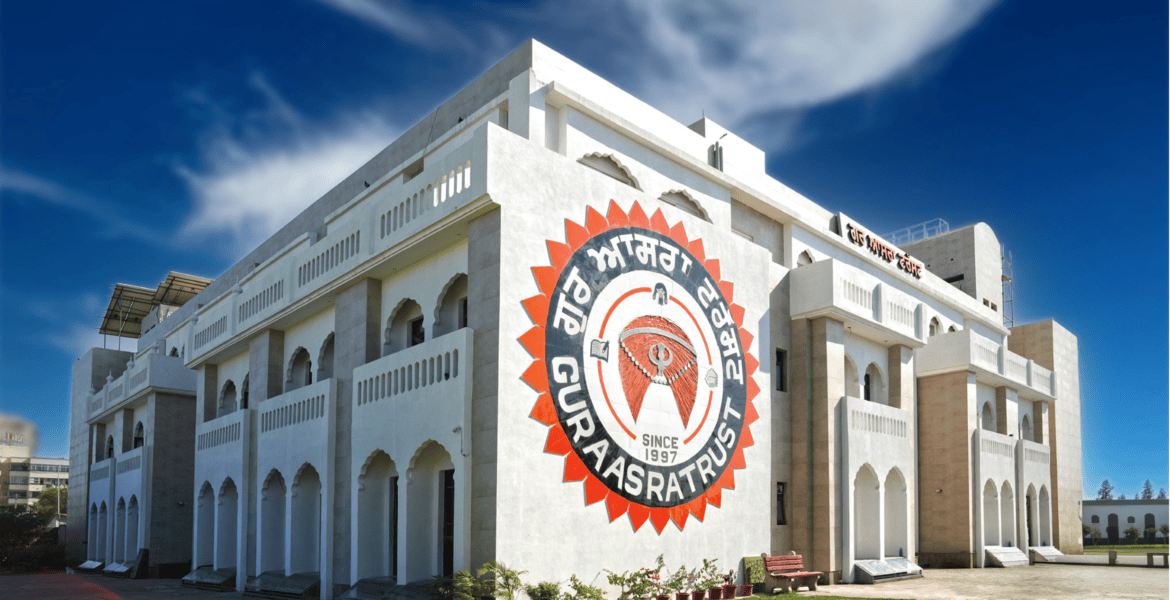
What began inside the Golden Temple in 1984 did not end there.
Its aftermath lives on in seventy-two children under one roof.
As her comrades at the Golden Temple complex dropped dead one by one, she soon found herself holding a rifle. She had entered the temple complex as a devotee, but left having crossed the line that divides terrorists from their sympathisers. When Operation Bluestar began, Kulbir Kaur Dhami was just twenty years old, a third year BA final student from Hoshiarpur. She had travelled to offer prayers to Guru Parab and to listen to Jarnail Singh Bhindranwale. She recalls, “We had gone there to listen to Santji, but found ourselves caught in the crossfire. We were stuck on the first floor of Guru Nanak Niwas when the Army started firing. The only thing that came to mind then was to lay our lives down fighting the attackers.”
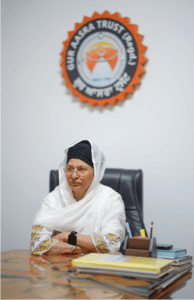 Kulbir found herself among a group of young men and women armed with pistols, SLRs, and .303 rifles. As her comrades dropped dead one after another, she too picked up a rifle. Years later, sitting in a rented house in Mohali that houses the Gur Aasra Trust, she recounts those moments. After her release from jail in 1996, she established this trust along with a girls’ home for children of those killed in Punjab, whom she considers martyrs.
Kulbir was neither caught nor killed during the operation. She escaped and went underground, remaining a fugitive until 1993. She crossed over to Pakistan in July 1984 and, as she states, crossed over and back several times. She says she did everything required for the cause, from networking to what she describes as field work. During this period, she also worked as a hostel warden at a girls’ school in Himachal Pradesh. “The police arrested me in May 1993 and kept me in illegal detention for nearly eleven months. Finally, my husband and I were shown as arrested and put in jail,” she says.
In January 1995, while still in jail and facing trial on terror charges, she gave birth to her second child. It was then that she conceived the idea of creating a home for children of those killed. “I set up Gur Aasra with a group of twenty-five girls. Most of these children had lost both parents in the fight with the state forces,” she says. Over the years that followed, nearly four hundred children grew up as young adults and left. Daughters of those killed between 1984 and 1992 gradually moved on, and only a handful remain today. “I think I will have to close this place down in another five years or so. I am thinking of starting an old age home instead,” she says. Funding from the Shiromani Gurdwara Parbandhak Committee has stopped.
From her close association with families of those killed, she speaks of the prolonged agony and neglect of widows. Many, she says, were shunned by their families and had their land taken away. As they grow older, they will need a place to stay. Reflecting on her own life, she says, “The movement for Khalistan did not take a planned path. As things happened to us, we acted.”
Kulbir’s personal life is marked by rupture. Her sister was taken away by the Nirankaris, after which her parents told her not to return home. She has not met any member of her family since then. During her imprisonment, she was later tied to her sister’s husband. She recalls that in prison there were three women in one cell, all with children, and they promised each other that if anything happened to any one of them, the others would take care of the children. Two of them were later taken away and killed.
After her release from jail in 2005, she stayed at a gurdwara sahib before moving into rented accommodation in Mohali. It was here that she began taking in children of those she refers to as martyrs. Although children were being sent by the government, she states that there was no financial support. After continued struggle, GMADA provided her accommodation on lease under the name of Gur Aasra Trust.
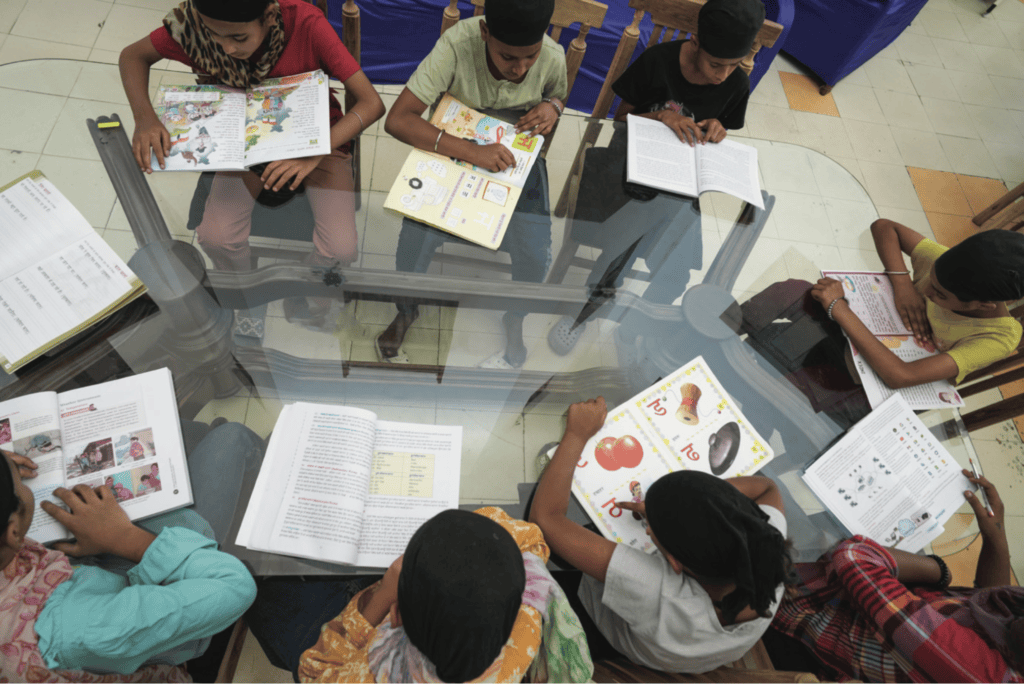 Gur Aasra Trust is currently accommodating seventy two residents, where they are provided with essential facilities including food and schooling. Kulbir says, “We have bunker beds in halls where the residents stay. We are taking care of them till the age of eighteen. After that, what happens is what worries me.”
She had also thought of starting an adoption programme. However, she explains that the paperwork and government regulations are difficult, there is no financial support, and she would require at least ten staff members to run such a system. As a result, the plan has not materialised.
As much as the schooling fee is, so is the cost of books and travel. She says, “There are a hundred small things to be paid for, and the expenses of uniform, books, and travel are costly. We do not put them in government schools, rather we have put them in private schools.”
Born in 1962 and belonging to the Hoshiarpur district, she recalls that the region was referred to as Babbar during the Akali movement, and was known as Babbar dia Dhamiya. “My father was an agriculturist and my mother was a homemaker. Since childhood, my inclination was towards the Almighty, as my home environment was such that Gurbani was always playing,” she says. She also notes that thirty seven gurdwaras were attacked during that period.
On June 1, seven members of her family went to Gurudwara Sahib in Amritsar. As the complex was already under surveillance, the attack began on June 2. “Sant ji said you can leave or stay, it is your choice. I stayed back, my family went back to the hometown,” she recalls. When she later asked whether she should return, she was told not to come back, as her sister had already been taken away. “I have not met any of my family members since then,” she says. She also adds that she was first sentenced for eleven months.
In 2015, the trust received High Court and CCI registration, yet there remains zero financial support from the government. Most of the children currently under her care come from Tarn Taran and the Majha region, where there are no homes for orphans.
When asked if the children are taken out for outings, she mentions that last year someone sponsored a trip for them to Mussoorie and Dehradun. When asked if there is any online way to sponsor the trust, she says, “Yes, but I say please do not do anything for us just by listening. Come here and witness. Not on blind faith, but by what you see. This is the philosophy I have worked on all my life.”
She also adds that she has female staff members to look after and take care of the children, since most of the time she is occupied with admissions, schooling, and other responsibilities. Support, she says, can be extended by sponsoring meals, ration, clothes, and other essentials.
Her life, as it stands, continues to be shaped by events that unfolded without design, and by a responsibility she has chosen to carry forward.