
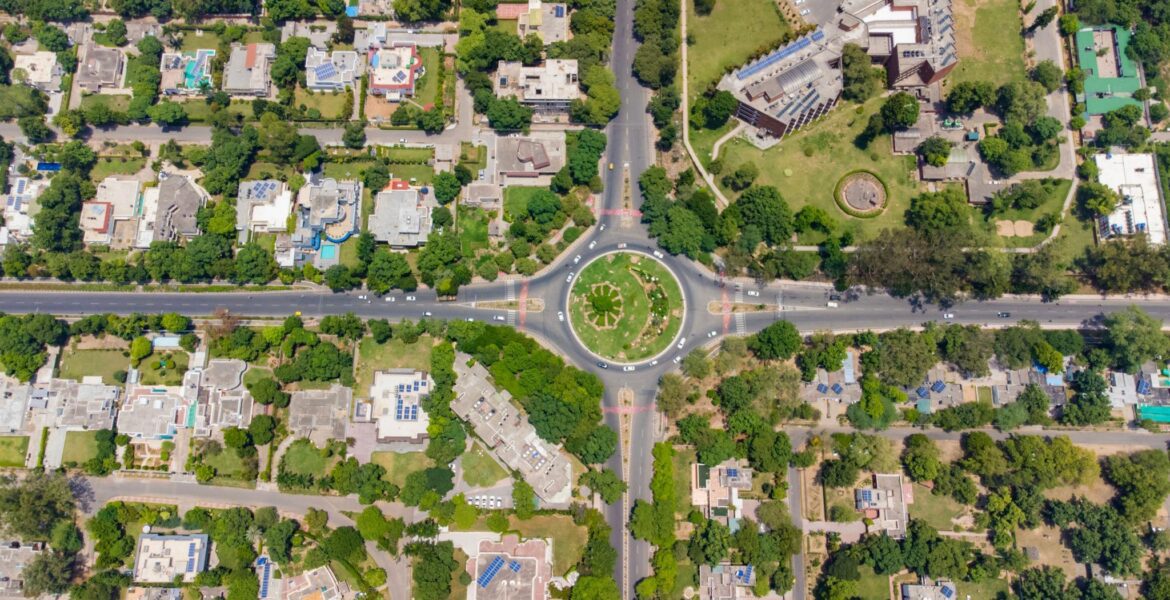
There are cities that expand indiscriminately, swelling into themselves until proportion is lost and identity dissolves into excess. And then there are cities that are composed with intent, shaped with discernment, and permitted the rare privilege of breathing. New Chandigarh belongs unequivocally to the latter. It does not pursue spectacle, nor does it indulge in ostentation. Instead, it cultivates stillness, offering a measured and almost contemplative alternative to the restless sprawl of contemporary urban India.
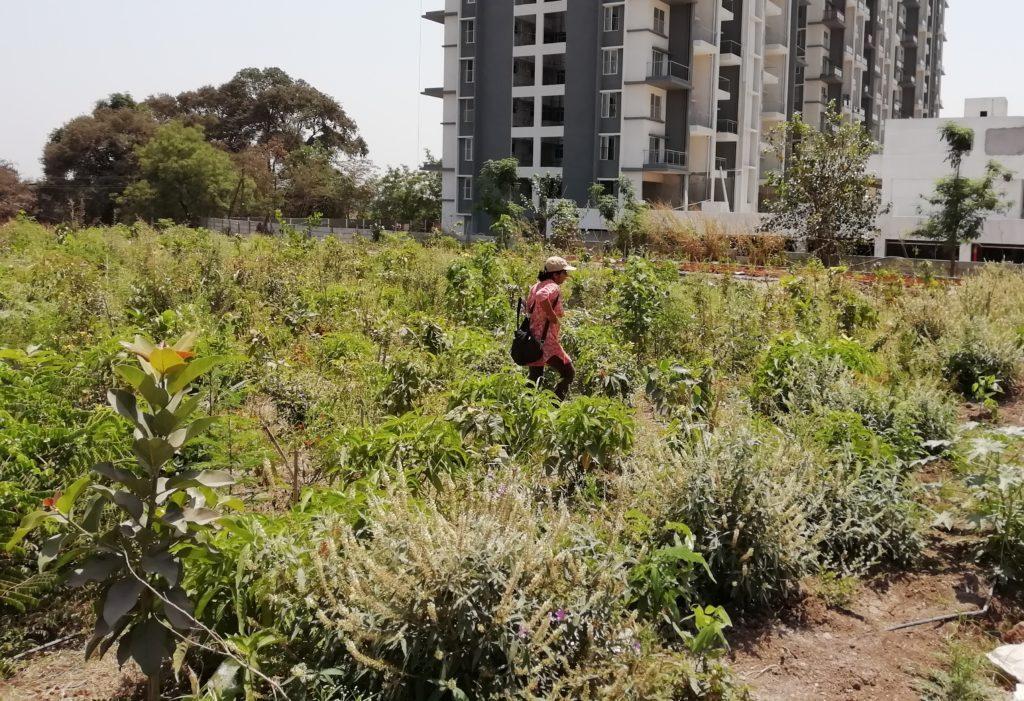
Set against the quiet majesty of the Shivalik foothills, New Chandigarh emerges not merely as an extension of an existing metropolis but as a philosophy articulated in space and silence. It is a place where urbanisation does not eclipse the landscape but yields to it with a certain humility, where development is evaluated not by the magnitude of construction but by the integrity of preservation.
At its core lies a principle that feels almost subversive in the context of modern expansion. Forest land shall remain forest land. It is neither negotiable nor subject to reinterpretation under the pressures of growth. It will endure, unaltered and inviolate. This singular commitment redefines the entire urban narrative, establishing a city where nature is not a decorative afterthought but an intrinsic presence. The skyline, consequently, is softened by foliage rather than fractured by aggressive verticality, and the environment retains a sense of continuity that feels increasingly rare.
The arithmetic of this vision is both precise and poetic. Eight to ten trees per individual, not as a superficial gesture towards sustainability but as a lived, immersive reality. One does not merely observe greenery here; one inhabits it. Sunlight arrives filtered through canopies, the air carries an uncharacteristic clarity, and even silence acquires a certain tactility. There is, undeniably, an elegance in restraint, and New Chandigarh demonstrates an intuitive understanding of this principle.
Density, in most urban discourses, is reduced to statistics and projections. In New Chandigarh, it transforms into an experience. Conceived as a low density habitat, the city offers space not as a privilege reserved for a few but as an inherent condition of living. Streets unfold rather than constrict, residences retain individuality rather than dissolving into repetition, and public spaces feel intentional rather than incidental. This deliberate resistance to crowding emerges as one of its most compelling luxuries, enabling a slower, more deliberate cadence of life. Children inhabit spaces without negotiation, evenings stretch without urgency, and the horizon remains unobstructed, a quiet but persistent reminder of openness.


Equally significant is the absence of an industrial framework. There are no looming factories to punctuate the skyline, no invisible residues of pollution to settle insidiously into the fabric of daily life. What remains instead is a residential ecosystem that feels protected, almost insulated from the harsher mechanics of urbanisation. In this context, quiet is not an absence but a carefully orchestrated presence, a design choice rather than an accident.
Every city is, to some extent, a reflection of its geography, yet few embody it with such grace. The Siswa reservoir lends the region a sense of quiet assurance, transforming water from a persistent urban anxiety into a reliable constant. Its presence is both functional and evocative, anchoring the terrain while imparting a subtle sense of tranquillity. Beyond it, the Shivalik foothills rise with understated authority, framing rather than overwhelming the city. Their shifting tones, sometimes sharply defined and at other times softened by mist, create a visual rhythm that connects the present to something far more ancient and enduring. To reside here is to maintain a continual awareness of landscape, not as a distant spectacle but as an intimate, ever present companion.
Connectivity, often the paradox of modern urban planning, is negotiated here with notable finesse. New Chandigarh remains closely linked to Chandigarh and its suburban extensions, ensuring effortless access to the broader urban ecosystem while simultaneously resisting absorption into its chaos. The roads are expansive and thoughtfully structured, free from the disorder that typically accompanies proximity to a major city. Movement is fluid, almost unintrusive, and commutes do not deplete but rather transition, marking a gentle passage between environments. It is a rare equilibrium, one that allows connectivity without surrendering autonomy.
A residential destination ultimately derives its value from the life it enables, and in this regard, New Chandigarh reveals a carefully curated social infrastructure. Education assumes a position of prominence, with institutions such as Bhavan Vidyalaya Chandigarh, Strawberry Fields High School Chandigarh, Doon Public School Chandigarh, and Dalhousie Public School offering not merely accessibility but distinction. These institutions bring with them a legacy of academic rigour and holistic cultivation, ensuring that education remains uncompromised. Healthcare facilities lie within convenient reach, reinforcing a sense of security that is both practical and psychological, while commercial establishments are integrated with discernment, existing to serve rather than to dominate.
 What ultimately distinguishes New Chandigarh is not any singular attribute but the coherence of its vision. Every element appears considered, every decision deliberate. The residences are conceived to engage with their surroundings rather than isolate from them, with balconies opening onto expanses of green and windows framing the quiet drama of the hills. Space is not constrained but allowed to unfold, creating an environment that feels at once expansive and intimate.
There is a quiet confidence embedded within this approach, one that eschews ostentation in favour of endurance. It offers not spectacle but belonging, not excess but equilibrium. In a world increasingly characterised by noise and acceleration, New Chandigarh extends a rare invitation to inhabit a life that is slower, clearer, and infinitely more expansive. It is not an escape from urbanity but its refinement, an evolution towards something more thoughtful, more measured, and ultimately more humane.
And perhaps, in this lies its most compelling luxury of all.