
A new-age hotelier shaping the future of experiential hospitality at Tivoli
At an age when many are still navigating the early contours of their professional lives, Akshay Gupta, Executive Director of Tivoli Hospitality Group, has already emerged as one of the most compelling young voices in Indian hospitality. With a rare blend of composure and clarity, he is guiding the brand’s evolution into a more refined, experience-led space, where scale is matched by sensibility.
 As the son of the Group’s founder, Rohit Gupta, Akshay represents a new generation of leadership that inherits not merely a business, but a philosophy. Where the foundation was built through instinct, perseverance, and relationships, he brings structure, design intelligence, technological integration, and a distinctly collaborative approach. His vision reflects a careful balance, one that honours legacy whilst embracing modernity with quiet confidence.
You come from a distinguished hospitality lineage. How have you balanced inheriting a legacy with establishing your own identity?
Having grown up alongside Tivoli, the brand was never external to me, it was part of my everyday environment. I witnessed both the challenges and the pride associated with building something from the ground up. Early on, I realised that emulating my father would neither be authentic nor effective.
He built the foundation through instinct and relationships. My role has been to respect that whilst introducing systems, processes, and a broader perspective. My leadership style is more collaborative and structured. I value listening, questioning, and recognising that leadership does not imply having all the answers. That balance has allowed me to contribute meaningfully without being constrained by legacy.
At under 30, you are already driving expansion beyond Delhi. What has been your strategic approach?
Our growth has been deliberately measured. Expansion must be purposeful and aligned with the brand’s ethos. We are not interested in simply marking presence; each location must elevate the standard of hospitality in that market.
Properties in Ambala, Gurgaon, and the upcoming Jim Corbett project each serve distinct strategic roles. North India continues to offer significant potential, particularly for well-designed, well-managed spaces that understand the scale and nuance of celebratory events. Looking ahead, we are exploring Rajasthan, parts of Uttarakhand beyond Corbett, and select Tier 2 cities where demand is strong but supply remains underdeveloped.
Tivoli has long been synonymous with wedding hospitality. How are you evolving this positioning?
Weddings remain integral to our identity, however, they have evolved into immersive, multi-day experiences. Our focus has shifted towards refining every touchpoint of that journey.
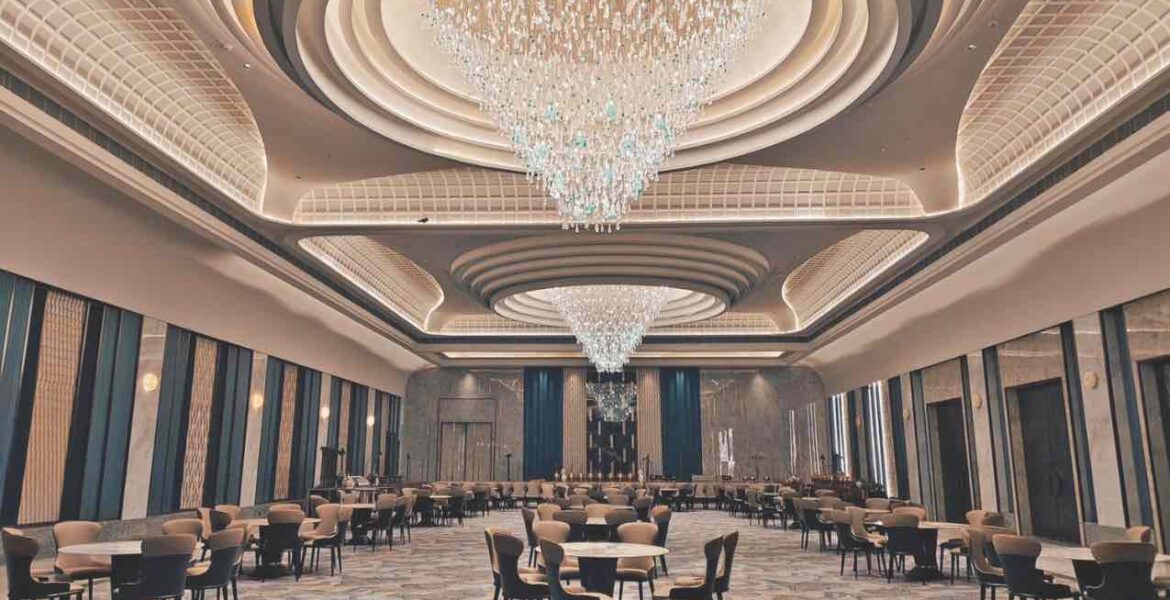
We have invested in spatial design, service detailing, culinary presentation, and overall guest experience. This includes cleaner aesthetics, improved lighting and acoustics, globally inspired menus, and teams trained in discretion and attentiveness. The aim is to create environments that feel celebratory yet composed, luxurious yet approachable.
Technology is increasingly central to hospitality. How is it shaping Tivoli?
For us, technology is a tool for refinement rather than display. Its purpose is to eliminate friction and ensure consistency. From backend operations such as inventory and staff management to guest data and feedback systems, technology enables efficiency and predictability.
A guest in Gurgaon should receive the same level of experience as one in Ambala. True scalability is built on consistency, and that is only achievable through robust systems.

The UpperHouse by Tivoli is a distinctive concept. What inspired it?
UpperHouse originated from a simple idea, why should iconic architecture be limited to metropolitan luxury hotels. We wanted to create a space that was visually striking yet versatile.
The oval glass structure was designed to introduce natural light, scale, and a sense of visual drama. It is not merely an aesthetic statement but a functional one, capable of hosting diverse formats, from weddings to fashion showcases. Its reception within the design community has affirmed that it resonates with a global sensibility.
You also serve as Director at Lafayette Jewellery. How does that influence your perspective?
Hospitality and jewellery share more parallels than one might assume. Both are emotional purchases, both rely on trust, and both demand uncompromising attention to detail.
My experience with Lafayette has deepened my appreciation for craftsmanship and patience. It reinforces the idea that detail is not an embellishment, it is fundamental. That philosophy translates directly into hospitality, whether in the smallest service gesture or the broader guest experience.
What challenges have you faced as a young leader in a legacy business?
Expectation has been the most significant challenge. Entering a legacy business at a young age often leads to polarised perceptions, either underestimation or unrealistic expectations.
I addressed this by immersing myself in operations, from kitchens to banquets to financial systems. Credibility is earned through consistency and involvement. Additionally, driving change within a legacy framework requires patience. One must remain patient without becoming complacent.
 How do you envision Tivoli evolving over the next five years?
I see Tivoli evolving into a multi-format hospitality group. Beyond weddings, we aim to develop boutique hotels, experiential resorts, curated event venues, and selective dining concepts.
Our positioning will become increasingly design-led and experience-centric. Expansion will remain disciplined, with a focus on creating fewer but more impactful properties.
What inspires you as a hotelier?
I am drawn to spaces that possess a sense of timelessness, places that mature rather than chase trends. I admire European hospitality for its restraint and craftsmanship, and Indian brands that deliver excellence with quiet confidence.
Inspiration also comes from beyond hospitality, from fashion, art, and retail, where principles of design and experience are equally significant.
Your message to aspiring hoteliers?
Hospitality is not defined by glamour. It demands resilience, adaptability, and an unwavering commitment to people. Those drawn solely by its perceived allure may find it challenging.
However, for those who find fulfilment in creating meaningful experiences, it is deeply rewarding. My advice would be to master the fundamentals, respect every role, remain patient, and understand that in hospitality, reputation travels far more swiftly than any marketing effort ever could.