
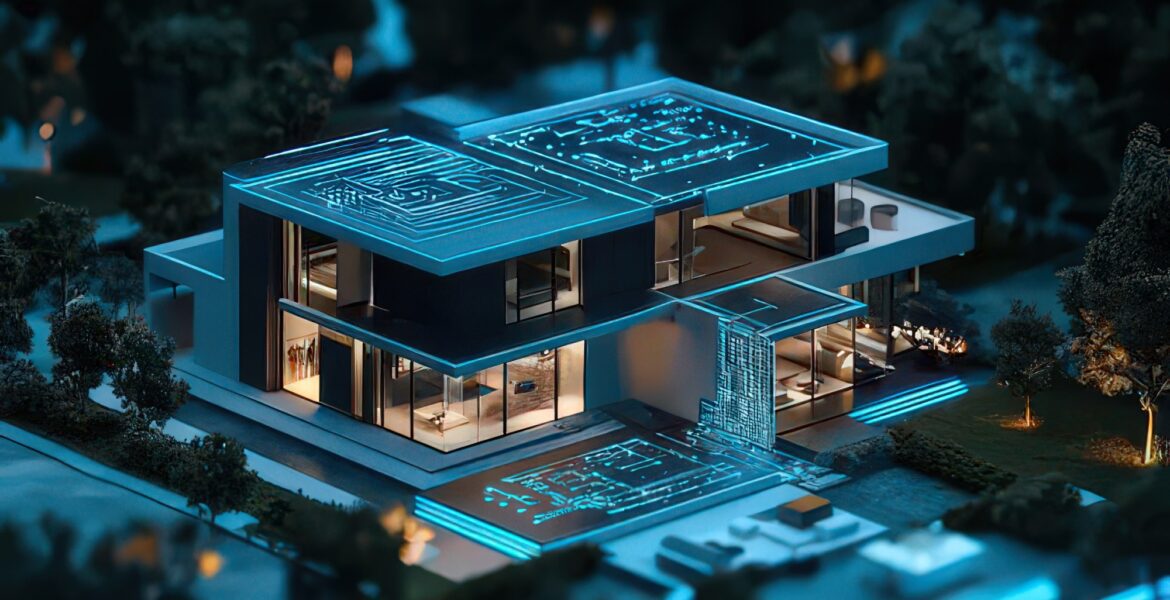
Luxury has always evolved with the aspirations of society. Every era has had its own definition of prestige. There was a time when grandeur was measured through sprawling estates, handcrafted architecture, imported stone, private gardens, and addresses that carried social significance. Later came exclusive clubhouses, infinity pools, concierge services, and bespoke interiors. Today, however, a profound shift is underway. The world’s most discerning homeowners are no longer impressed solely by what they can see. Instead, they are increasingly investing in something far less visible but infinitely more valuable: security powered by technology.
In the contemporary luxury landscape, security is no longer a necessity discreetly tucked behind walls and gates. It has become a defining amenity, an essential component of elite living, and perhaps the most sophisticated expression of modern luxury. As wealth grows, lifestyles become increasingly connected, and privacy becomes more elusive, affluent homeowners are demanding protection that is intelligent, seamless, and proactive. The future of luxury is not merely about comfort. It is about confidence, assurance, and peace of mind.
The transformation has been driven largely by advances in technology. Traditional security systems were designed to respond after an incident had already occurred. Cameras recorded footage. Alarms sounded after an intrusion. Guards reacted to events as they unfolded. While effective for their time, such systems were inherently reactive. Modern technology has completely rewritten this narrative. Artificial intelligence, machine learning, predictive analytics, biometric identification, and interconnected smart systems have introduced a new era in which threats can be identified, analysed, and often prevented before they materialise.
Imagine a residence that understands its environment as intuitively as a human being. Cameras no longer function merely as recording devices. They analyse behaviour, identify unusual movement, distinguish between familiar faces and unknown visitors, and immediately notify security personnel when something appears out of place. Artificial intelligence enables these systems to learn patterns over time. They recognise when a resident leaves for work, when household staff arrive, and when routine activities occur. Any deviation from these established patterns triggers immediate attention. What once required constant human observation can now be achieved through intelligent automation operating continuously and without interruption.
 The rise of biometric technology has further elevated residential security. For generations, homeowners relied on locks, keys, passwords, and access cards. Each carried inherent vulnerabilities. Keys could be misplaced. Passwords could be compromised. Access cards could be duplicated. Biometric authentication has largely eliminated these concerns by replacing traditional credentials with uniquely human identifiers. Facial recognition systems, fingerprint scanners, iris recognition technology, and voice authentication are rapidly becoming standard features in ultra-luxury developments around the world.
The appeal lies not only in enhanced security but also in effortless convenience. Residents no longer need to search for keys or remember access codes. Their homes recognise them instantly. Doors open automatically. Elevators grant access to authorised floors. Visitors can be approved remotely through secure applications, ensuring complete control regardless of the homeowner’s location. This seamless integration of technology creates an experience where security feels less like a barrier and more like a personalised service.
At the same time, surveillance technology has undergone a remarkable transformation. The cameras of the past simply documented events. Today’s systems actively interpret them. Equipped with advanced analytics, smart surveillance networks can identify suspicious behaviour, detect unauthorised access attempts, monitor crowd movements, and even recognise abandoned objects. The sophistication of these systems is extraordinary. They can distinguish between residents, guests, delivery personnel, and strangers. They can determine whether a person is behaving normally or exhibiting signs of suspicious activity. Most importantly, they provide actionable intelligence rather than passive observation.
 This evolution is particularly important within luxury communities and private estates, where security expectations are exceptionally high. Residents expect not only protection but also discretion. Intelligent surveillance systems satisfy both demands. They operate quietly in the background, preserving privacy while maintaining constant vigilance. The result is an environment that feels welcoming rather than restrictive, secure rather than intrusive.
Beyond the walls of individual residences, technology is redefining perimeter security. Historically, gates and fences served as the primary deterrents against intrusion. While these physical barriers remain important, they are now complemented by sophisticated digital systems capable of detecting threats long before they reach the property itself. Thermal imaging cameras monitor movement in darkness. Motion sensors analyse activity across vast areas. Radar-based detection systems identify approaching vehicles and individuals. Artificial intelligence processes this information instantaneously, determining whether an alert requires attention or can be safely ignored.
This layered approach significantly strengthens protection. Rather than relying on a single line of defence, luxury properties now employ multiple interconnected systems that work together to create a comprehensive security ecosystem. Intrusions become increasingly difficult, while response times improve dramatically. The result is a level of preparedness that was once reserved for government facilities and critical infrastructure.
The integration of aerial surveillance represents another significant advancement. Drones, once viewed primarily as recreational devices, have become powerful security tools. Equipped with high-definition cameras, thermal imaging capabilities, and real-time communication systems, they provide an entirely new perspective on property protection. Large estates, gated communities, luxury resorts, and expansive residential developments can now be monitored from above with remarkable efficiency.
Unlike fixed cameras, drones offer mobility and adaptability. They can investigate alerts, inspect remote areas, and provide instant situational awareness during emergencies. Their ability to access difficult terrain and deliver live footage enables security teams to assess risks more effectively than ever before. As autonomous technologies continue to mature, drones are expected to become an increasingly common feature within high-end security networks.
Yet perhaps the most significant challenge facing modern homeowners exists not outside the home but within its digital infrastructure. The rise of smart living has introduced unprecedented convenience. Lighting systems, climate controls, entertainment platforms, appliances, and security devices can now be controlled remotely through smartphones and voice assistants. While these innovations have transformed daily life, they have also created new vulnerabilities.
Cybersecurity has therefore emerged as an essential component of luxury living. Wealthy individuals are increasingly aware that digital breaches can be as damaging as physical intrusions. Personal information, financial records, private communications, and connected home systems all require protection. As a result, developers and technology providers are investing heavily in advanced cybersecurity measures designed specifically for high-net-worth households.
Encryption technologies, secure networks, multi-factor authentication, and artificial intelligence-driven threat detection systems now form part of the broader security landscape. These measures safeguard digital assets while ensuring that smart homes remain both functional and secure. The concept of home security has expanded dramatically. It is no longer confined to physical boundaries. It encompasses every aspect of the connected environment.
Privacy, too, has become a defining concern for affluent homeowners. In an age characterised by constant connectivity, maintaining confidentiality has become increasingly difficult. Business leaders, entrepreneurs, celebrities, and public figures often face unique challenges related to personal security and privacy. Consequently, luxury developments are placing greater emphasis on technologies designed to protect sensitive information and preserve anonymity.
Advanced access controls, encrypted communication systems, secure data storage solutions, and privacy-focused design principles are becoming hallmarks of premium developments. Some residences incorporate dedicated privacy zones where digital devices are restricted. Others utilise signal-blocking technologies that prevent unauthorised tracking or surveillance. These innovations reflect a broader understanding of security as a multidimensional concept encompassing both physical and digital wellbeing.
Technology is also revolutionising emergency response capabilities. Fires, gas leaks, floods, and structural failures can escalate rapidly if not addressed immediately. Intelligent monitoring systems now provide continuous oversight of environmental conditions, detecting potential hazards before they become critical. Sensors can identify smoke particles, monitor air quality, detect water leaks, and recognise structural abnormalities. When necessary, automated systems initiate immediate responses while simultaneously alerting residents and emergency services.
Such capabilities are invaluable because they reduce reliance on human intervention during moments of crisis. By automating critical processes, technology helps minimise damage, protect occupants, and improve outcomes. In luxury environments where expectations are exceptionally high, this level of preparedness is increasingly viewed as indispensable.
Despite these extraordinary advancements, technology has not diminished the importance of human expertise. Rather, it has enhanced it. Security professionals today operate in partnership with intelligent systems that provide unprecedented levels of information and situational awareness. Their role has evolved from passive monitoring to strategic risk management. Human judgement, experience, and adaptability remain essential components of effective security operations.
This collaboration between human intelligence and technological innovation represents the future of protection. Machines excel at processing vast quantities of information and identifying patterns. Humans excel at interpretation, decision-making, and contextual understanding. Together, they create a security framework that is both highly efficient and deeply responsive.
 As the luxury sector continues to evolve, security will increasingly define the value proposition of premium developments. Buyers are no longer evaluating properties solely on location, design, or amenities. They are assessing the quality of protection, the sophistication of technological infrastructure, and the extent to which a residence can safeguard their lifestyle. In many respects, security has become the ultimate luxury amenity because it enables residents to fully enjoy every other aspect of their environment.
Looking ahead, the convergence of artificial intelligence, robotics, biometric authentication, predictive analytics, and advanced cybersecurity will continue to reshape the security landscape. Homes will become more intuitive, more responsive, and more capable of anticipating risks before they arise. Protection will become increasingly invisible, woven seamlessly into the fabric of everyday life. The most successful luxury developments will not simply offer security systems; they will offer intelligent environments designed to provide complete peace of mind.
The future of luxury is no longer measured solely by what a home possesses. It is measured by how effectively that home protects its occupants, preserves their privacy, and adapts to an increasingly complex world. In this new era, security is not merely a feature. It is an experience. It is the silent guardian of modern luxury, operating constantly, intelligently, and discreetly in the background. As technology continues to advance, one reality becomes unmistakably clear: the most coveted luxury of all is the ability to feel completely secure.
Inputs by Joginder Singh Bedi
Digital Team