
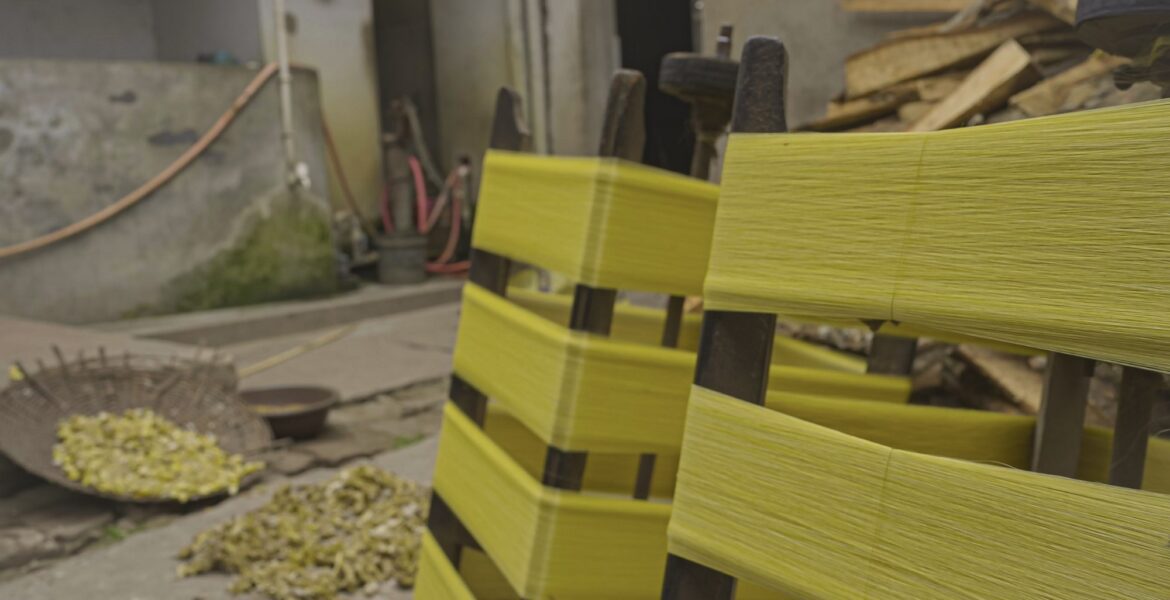
Silk has long occupied a place of reverence in human civilisation. Associated with luxury, refinement and cultural heritage, it has adorned royalty, featured prominently in religious ceremonies and become synonymous with elegance across continents. In India, silk is woven into the very fabric of cultural identity. From the intricate Baluchari sarees of West Bengal to the luminous Kanjeevarams of Tamil Nadu and the regal Banarasi weaves of Uttar Pradesh, silk represents artistry, tradition and economic livelihood for millions. Yet behind its lustrous sheen lies a production process that few consumers fully understand, and one that raises increasingly urgent ethical questions.
For centuries, silk has been celebrated as one of the world’s most prized natural fibres. Its softness, strength and iridescent appearance have ensured its enduring appeal. However, as consumers become more conscious of the environmental and ethical implications of their purchases, scrutiny is expanding beyond conventional concerns such as sustainability and labour rights. Increasingly, attention is being directed towards the lives of the creatures whose existence makes silk possible.
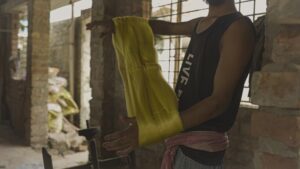 A recent investigation conducted by Reporters for Animals in the silk-producing districts of Malda and Murshidabad in West Bengal has cast fresh light on the realities of conventional silk production. The findings reveal not only the scale of India’s silk industry but also the inherent dependence of the production process on the interruption of a silkworm’s natural life cycle. While the industry remains an important source of employment and cultural heritage, the investigation invites a broader conversation about transparency, consumer awareness and the ethical dimensions of luxury.
The journey of silk begins not in textile workshops or fashion houses, but in mulberry fields. Across the fertile landscapes of Malda, rows of mulberry plants stretch across vast agricultural tracts. Their leaves provide the sole source of nourishment for Bombyx mori, the domesticated silkworm responsible for producing the majority of the world’s silk. Generations of farming families have cultivated these plantations, supplying the raw material that sustains one of India’s oldest textile traditions.
Once hatched, silkworms spend their lives consuming mulberry leaves with remarkable efficiency. After several weeks of feeding and growth, they enter the pupal stage and begin spinning cocoons. Using specialised glands, each silkworm produces a single continuous filament coated with sericin, a natural protein that binds the strands together. The resulting cocoon serves as a protective enclosure in which the insect undergoes metamorphosis and eventually emerges as a moth.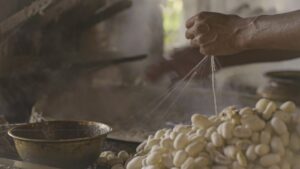
In nature, this process would culminate in the moth breaking through the cocoon and completing its life cycle. Within conventional silk production, however, that emergence presents a commercial problem. The act of escaping fractures the continuous filament, reducing its length and making it unsuitable for producing the smooth, uniform fibres prized by the textile industry.
Consequently, cocoons are collected before the moth can emerge. They are then subjected to boiling or steaming, a process known as stifling. This stage performs two essential functions. Firstly, it kills the developing pupa. Secondly, it softens the sericin coating, enabling workers to unravel the silk filament in one continuous strand. The uninterrupted fibre produced through this method is what gives conventional silk its celebrated texture, strength and lustre.
The investigation documented this process in detail, confirming that the killing of silkworm pupae is not an accidental by-product of silk manufacturing but rather a structural requirement of conventional silk production. Without preventing moth emergence, the industry would be unable to produce the continuous filaments upon which its commercial model depends.
The scale of this process is difficult to comprehend. Industry estimates suggest that a single silk saree may require between 6,000 and 10,000 cocoons, depending upon factors such as fabric weight, yarn quality and design complexity. Given India’s position as the world’s second-largest silk producer and largest silk consumer, the number of silkworms involved annually reaches extraordinary proportions.
According to data associated with the Central Silk Board, India’s raw silk production exceeded 30,000 tonnes during the 2024–25 financial year. Mulberry silk accounted for the overwhelming majority of this output, reinforcing its central role within the nation’s textile economy. While alternative silk varieties such as Eri, Tasar and Muga contribute to overall production, conventional mulberry silk remains the backbone of the industry.
The findings from West Bengal therefore extend beyond a single region. They offer insight into a production system that underpins a significant portion of India’s silk sector and supports an extensive network of farmers, reelers, dyers, weavers, traders and exporters.
Murshidabad, one of the districts included in the investigation, exemplifies this complexity. Renowned for its rich silk heritage, the district remains a centre of textile craftsmanship. Silk yarn produced in neighbouring regions is transformed into exquisite garments by skilled artisans whose expertise has been passed down through generations.
Among the most celebrated products are Baluchari sarees, distinguished by elaborate narrative motifs depicting scenes from mythology, folklore and historical life. Woven using sophisticated jacquard techniques, these textiles represent extraordinary artistic achievement. Depending upon the complexity of the design, a single saree may require days or even weeks of painstaking labour.
Similarly, traditional Garad or Gorood sarees continue to hold cultural significance within Bengal, particularly during religious ceremonies and festive occasions. Their understated elegance, characterised by off-white bodies and contrasting red borders, has ensured their enduring popularity across generations.
These weaving traditions support countless artisan households and contribute significantly to local economies. This reality introduces a crucial dimension to the ethical debate surrounding silk. Discussions about animal welfare cannot ignore the livelihoods of communities whose identities and incomes are deeply intertwined with sericulture and textile production.
Yet economic importance does not negate ethical responsibility. Rather, it highlights the need for nuanced conversations that acknowledge multiple stakeholders while remaining honest about the realities of production.
The investigation also highlighted concerns extending beyond the treatment of silkworms themselves. Various studies and reports examining the broader silk supply chain have identified issues including child labour, exploitative employment arrangements and occupational health risks. Workers involved in reeling and processing silk may face exposure to high temperatures, repetitive physical strain, respiratory discomfort and chemical substances used during cultivation and manufacturing.
Mulberry cultivation presents additional environmental challenges. The intensive production required to sustain large silkworm populations can involve significant pesticide use, raising concerns regarding ecological impacts and human health. Although practices vary considerably across regions and producers, these factors contribute to a wider discussion about transparency and accountability throughout the industry.
For many consumers, such realities remain largely unknown. Silk is often marketed through narratives of craftsmanship, heritage and luxury. Rarely does packaging or advertising explain the biological processes underpinning its production. As a result, individuals may purchase silk garments without understanding how they are made or the ethical questions they raise.
This gap between perception and reality has become increasingly significant in an era characterised by conscious consumerism. Shoppers are asking more questions about supply chains, environmental impacts and animal welfare. They seek information that enables informed choices rather than relying solely upon marketing narratives.
Within this context, alternative forms of silk have begun attracting attention. Among the most prominent is Eri silk, sometimes marketed as Ahimsa silk or peace silk. Unlike conventional mulberry silk, Eri production typically allows the moth to emerge naturally before the cocoon is processed. Because the cocoon has already been broken, the resulting fibres must be spun rather than reeled, creating a texture and appearance distinct from traditional mulberry silk.
While Eri silk offers a potential alternative for consumers concerned about animal welfare, its production remains comparatively limited. It occupies a niche segment of the market and currently lacks the scale necessary to replace conventional silk production. Moreover, debates continue regarding the extent to which various forms of peace silk fully address ethical concerns throughout the supply chain.
The existence of alternatives nevertheless demonstrates that innovation within the textile sector is possible. As consumer awareness evolves, demand may encourage further exploration of production methods that balance cultural heritage, economic viability and ethical considerations.
At the heart of the conversation lies a fundamental question: what responsibilities accompany luxury? Historically, many products associated with prestige have undergone ethical reassessment as societies have evolved. Practices once accepted without question are increasingly scrutinised through contemporary understandings of welfare, sustainability and social responsibility.
Silk now finds itself within this broader pattern of reflection. The issue is not merely whether silk possesses cultural significance or economic value. It unquestionably possesses both. Rather, the question concerns whether consumers deserve greater transparency regarding the processes involved in its creation and whether industries can adapt to emerging ethical expectations.
The investigation undertaken by Reporters for Animals does not seek to erase centuries of tradition. Instead, it illuminates realities that have remained largely invisible to the public. By documenting the journey from mulberry cultivation to finished textile, it encourages a conversation grounded in evidence rather than assumption.
Ultimately, informed choice depends upon informed awareness. Consumers cannot meaningfully evaluate ethical questions if they lack access to accurate information. Investigations such as this perform an essential public service by revealing aspects of production that would otherwise remain hidden behind the finished product.
Silk will undoubtedly continue to occupy an important place within India’s cultural and economic landscape. Its beauty, artistry and heritage remain undeniable. Yet beauty and scrutiny need not be mutually exclusive. Indeed, true appreciation of any craft requires an honest understanding of its origins.
As awareness grows, the future of silk may be shaped not only by tradition and commerce but also by an expanding dialogue about compassion, accountability and transparency. The threads that bind these conversations together are becoming increasingly difficult to ignore. Behind every shimmering garment lies a story, and increasingly, consumers are asking to hear it in full.