
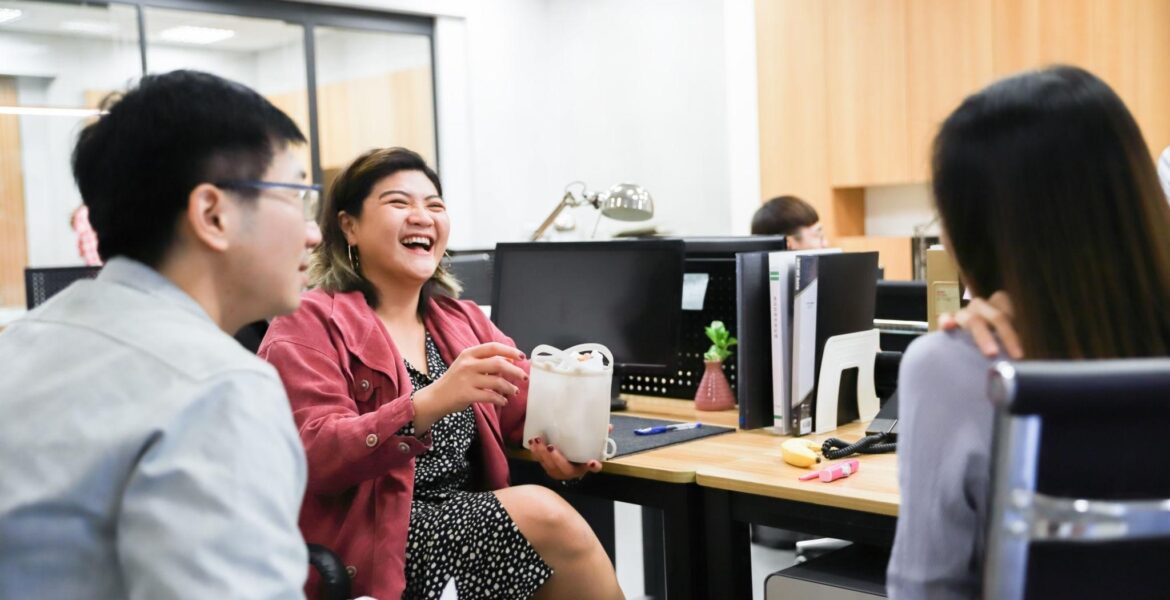
 In an era where corporate culture is often reduced to PowerPoint presentations, onboarding manuals, and carefully rehearsed induction sessions, truly meaningful human connection has become increasingly rare. Across industries, companies continue to invest heavily in infrastructure, branding, technology, and performance metrics, yet many still overlook one fundamental truth: people do not thrive merely because they are hired, they thrive because they feel seen, welcomed, and included.
At a time when employee burnout, workplace anxiety, and emotional disconnect dominate conversations around professional life, organisations that prioritise empathy over hierarchy stand apart. Among those quietly cultivating a more thoughtful and emotionally intelligent workplace ecosystem is GB Realty through its evolving work culture at Opus One.
One particularly striking example of this philosophy lies in a deceptively simple yet deeply impactful initiative introduced for new employees joining the organisation. Whenever a new team member becomes part of the company, the Human Resources department assigns an existing employee from a completely different vertical to accompany the newcomer for lunch. While on paper it may appear to be a small gesture, its psychological, emotional, and cultural significance runs far deeper.
It is not merely a lunch. It is a carefully designed moment of belonging. In many organisations, a new employee often walks into an unfamiliar environment carrying invisible anxieties. They are trying to memorise names, understand internal dynamics, decode office culture, and simultaneously prove their competence. Even the most confident professionals can experience subtle isolation during their initial weeks. A corporate office, regardless of how luxurious or modern it may appear, can feel intimidating when relationships have not yet been formed. This is precisely where the brilliance of Opus One’s approach emerges.
Instead of limiting onboarding to formal introductions and departmental briefings, the company consciously introduces a human bridge. By pairing the new joiner with someone from a different vertical, the interaction becomes refreshingly free of professional pressure. There are no targets to discuss, no performance expectations to analyse, and no hierarchical boundaries dictating the conversation. What remains is a genuine opportunity to connect as individuals rather than merely colleagues.
The idea is simple yet powerful: create familiarity before formality takes over. That one lunch can significantly ease the emotional transition into a new workplace. It provides the newcomer with a friendly face in an unfamiliar environment. The next time they pass each other in the corridor, there is already recognition, comfort, and warmth. A greeting becomes natural rather than awkward. Conversations begin to flow more organically. Slowly but surely, the office stops feeling like a system and starts feeling like a community. In essence, the initiative mirrors the comfort of having a workplace buddy without officially labelling it as one.
The modern workforce, especially younger professionals entering highly competitive industries, increasingly values emotional safety alongside professional growth. Salary packages and designations may attract talent, but culture determines whether people stay. Employees today are not merely looking for employment; they are seeking environments where they feel respected, acknowledged, and psychologically secure.
This is particularly important in sectors like real estate and infrastructure development, where operations often involve multiple departments functioning simultaneously under high-pressure conditions. Sales, marketing, architecture, design, operations, legal teams, finance, customer relations, and administration all operate with distinct responsibilities. Without intentional efforts to build interpersonal connectivity, these departments can easily become isolated silos.
Opus One’s onboarding approach subtly dismantles those invisible walls. By encouraging cross-vertical interaction from day one, the organisation is fostering a culture where collaboration feels natural rather than forced. Employees begin understanding that every department contributes to the larger ecosystem. They develop respect not just for their own role, but for the people working across functions. Over time, this creates a healthier organisational rhythm where communication becomes smoother and empathy becomes embedded into professional interactions.
Interestingly, the initiative also addresses a growing challenge in modern corporate environments: loneliness in the workplace. Despite being surrounded by people, many professionals experience emotional detachment at work. Hybrid schedules, digital communication, performance pressures, and transactional networking have collectively reduced opportunities for authentic human interaction. Many employees spend months in offices without forming a single meaningful connection beyond their immediate teams.
Something as simple as a shared lunch changes that dynamic. Food has historically carried emotional significance across cultures. Conversations over meals naturally lower social barriers. People speak more openly, laugh more freely, and connect more effortlessly. By integrating this timeless human experience into corporate onboarding, Opus One is introducing emotional intelligence into organisational structure in a way that feels effortless rather than performative.
And perhaps that is what makes the initiative so effective. It does not feel forced.
There are no motivational speeches attached to it. No elaborate corporate jargon attempting to over-explain the concept. Instead, it operates through subtle human warmth, which often leaves a far more lasting impression than grand institutional declarations ever could.
Workplace culture is frequently discussed in abstract terms, but culture is not built through slogans written on office walls. It is built through repeated human experiences. It reveals itself in how employees are treated when they first arrive, how approachable leadership feels, how teams communicate during stressful situations, and whether kindness exists within everyday professional interactions.
At Opus One, this buddy-style lunch initiative reflects a deeper organisational understanding that relationships influence productivity far more than companies often acknowledge.
When employees feel emotionally comfortable, they communicate better. When communication improves, collaboration strengthens. When collaboration strengthens, workplace efficiency naturally follows. In this sense, emotional inclusion is not separate from organisational success; it is directly connected to it.
Global research around workplace psychology repeatedly reinforces this idea. Employees who feel socially connected at work tend to perform better, adapt faster, and demonstrate stronger long-term engagement. They are more likely to contribute creatively, communicate openly, and remain loyal to organisations that value their emotional well-being.
Yet despite this growing awareness, many companies continue treating onboarding as a checklist exercise rather than a human experience. This is what makes Opus One’s approach refreshingly relevant.
The initiative also quietly reshapes professional hierarchy. In traditional corporate structures, employees often interact only within designated professional circles. New joiners may hesitate to speak openly outside their departments due to fear of appearing uninformed or inexperienced. Cross-vertical buddy interactions challenge that rigidity by creating informal access points across the organisation.
Over time, such practices cultivate an environment where approachability becomes part of the organisational DNA.
Imagine a workplace where employees from different departments naturally greet each other in hallways, exchange casual conversations during breaks, or comfortably collaborate during projects because an initial human connection already exists. Such environments reduce friction, strengthen morale, and ultimately create healthier professional ecosystems.
What is particularly admirable is that this initiative demonstrates that impactful workplace culture does not always require extravagant spending or complicated systems. Sometimes, thoughtful intention is enough.
In a business world obsessed with scale, automation, and expansion, human sensitivity often becomes secondary. But companies that understand the value of emotional infrastructure inevitably build stronger foundations internally. After all, businesses may be driven by strategy, but organisations are sustained by people.
At its core, the lunch initiative reflects an understanding that professional transitions are deeply personal experiences. A new employee is not simply entering a payroll system; they are stepping into an entirely new social environment. A welcoming interaction during those early days can significantly influence their confidence, comfort, and overall perception of the organisation. The psychological impact of feeling welcomed should never be underestimated.
For many employees, especially those relocating from different cities or transitioning from stressful work environments, these small gestures become memorable moments. Years later, people may forget onboarding presentations or HR documents, but they often remember how a workplace made them feel during their first week. That emotional memory matters, as it shapes organisational reputation from within.
As workplace conversations continue evolving globally, companies are increasingly being evaluated not only by profitability or infrastructure, but by the quality of their internal culture. Employees today openly discuss mental well-being, emotional support, inclusivity, and professional respect. In such an environment, organisations that actively nurture human connection gain a meaningful cultural advantage.
Opus One’s onboarding philosophy aligns strongly with this emerging future of work, one where empathy is not viewed as weakness, but as intelligent leadership.
The initiative also serves as a reminder that professionalism and warmth are not mutually exclusive. A workplace can maintain excellence, ambition, and discipline while still being emotionally considerate. In fact, the most sustainable organisations are often those that understand how to balance performance with humanity.
In many ways, the corridor greeting symbolises the entire philosophy behind the initiative.
Two employees crossing paths and naturally acknowledging each other may seem insignificant to an outsider. But within workplace psychology, that small moment carries immense value. It signals familiarity. Recognition. Inclusion. It subtly communicates: you are not invisible here.
And in fast-paced corporate environments where people often feel reduced to designations and deadlines, that feeling can make all the difference.
As companies continue searching for innovative ways to improve employee retention and engagement, perhaps the answer does not always lie in grand gestures or expensive interventions. Sometimes, the most transformative workplace cultures are built through simple acts of intentional kindness.
A shared lunch.
A familiar face.
A warm greeting in the corridor.
At GB Realty and Opus One, these seemingly ordinary moments are being used to create something increasingly extraordinary in the modern corporate world: genuine human connection.