
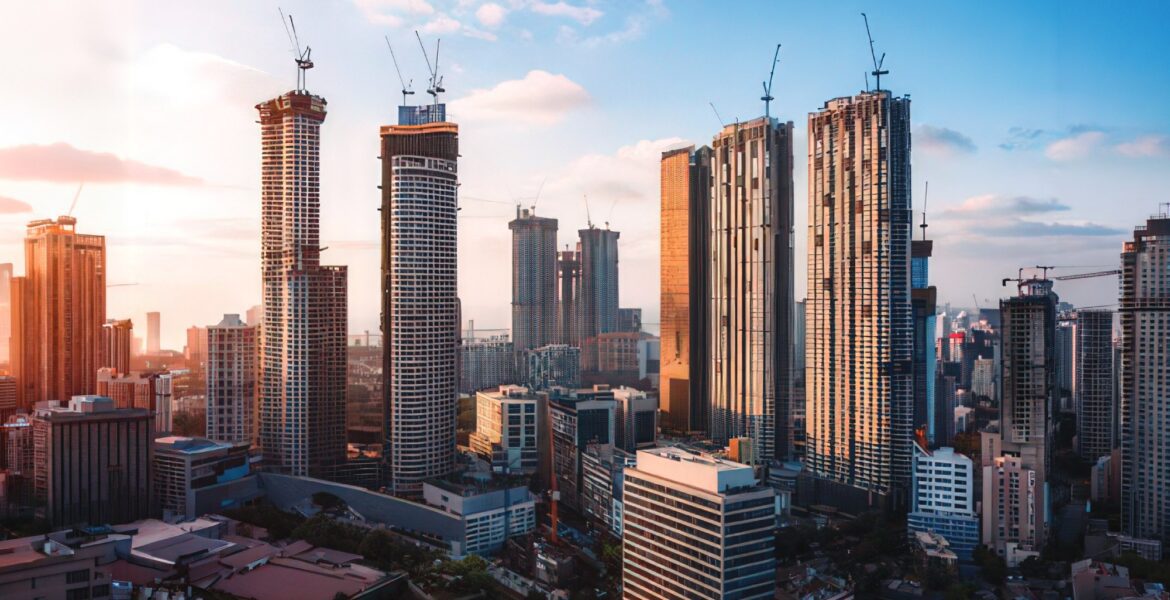
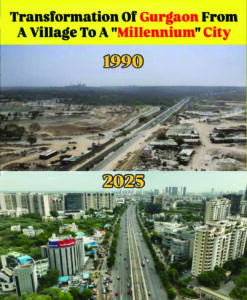
 When Gurgaon began its transformation from a cluster of villages into one of India’s most sought-after real estate destinations, few could have predicted the scale of growth that would follow. Wide roads, corporate hubs, luxury residences and integrated infrastructure gradually reshaped the city’s identity. Today, as conversations around India’s next emerging urban destination gather pace, New Chandigarh is increasingly finding itself compared with Gurgaon’s early years.
For Munish Sharma, Vice President Sales at Opus One by GB Realty, that comparison is not merely a market observation. It is a journey he has witnessed from the front row, shaped by nearly two decades of experience in real estate and a deep belief in the power of planned urban development.
Born and brought up in the small town of Bassi Pathana near Fatehgarh Sahib, Sharma’s roots remain firmly embedded in Punjab. After completing his early education there, he moved to Rajpura in 2002 and later pursued his post-graduation in Fatehgarh Sahib. Real estate was never part of a carefully crafted career plan. Instead, it was the wave of infrastructure development sweeping across India in the early 2000s that sparked his interest. Coming from a family deeply connected with education, both his father and mother worked in the Education Department. Their emphasis on discipline, learning and long-term thinking helped shape Sharma’s outlook from an early age and continues to influence his professional approach today.
By December 2006, he had begun his professional journey with a renowned real estate group as an executive. His first posting was in Dera Bassi, marking the beginning of what would become a remarkable eighteen-year association with one organisation. Over the years, his responsibilities took him across Punjab, including Patiala, Ludhiana, Bathinda and eventually New Chandigarh. Those assignments allowed him to witness firsthand the changing aspirations of homebuyers and the gradual evolution of organised real estate across the state.
At a time when Gurgaon was emerging as the benchmark for modern urban development, Punjab was still adapting to concepts such as apartment living and integrated townships. Sharma recalls being part of projects that introduced entirely new housing formats to local buyers.
One of the earliest examples was in Ludhiana, where organised residential development helped familiarise residents with apartment living. At a time when many people were accustomed to independent homes and farmhouse style living, the concept represented a significant shift in mindset. Over the years, growing acceptance of organised communities reflected changing lifestyles and evolving aspirations among homebuyers across Punjab.
Although many professionals sought opportunities in Delhi NCR during those years, Sharma chose to remain in Punjab. Family responsibilities influenced that decision, but there was also a strong desire to contribute to the development of his home state. He believed Punjab’s real estate story was only beginning and wanted to play a role in shaping it.
That conviction strengthened when New Chandigarh entered the picture. Long before the region became a recognised destination, Sharma was among those selling its vision. Even before relocating there in 2014, he was handling sales for New Chandigarh from Patiala. The task was far from easy. The New Chandigarh of that era looked nothing like the destination people see today.
Infrastructure was minimal, roads were limited and connectivity was weak. Most of the ambitious plans existed only on paper. Explaining the concept of a master planned city often proved more challenging than discussing the properties themselves. Visitors struggled to imagine how vast stretches of farmland and open land could one day become a thriving urban centre.
Many prospective buyers turned back before completing site visits. Some questioned why they should invest in a location where little visible development existed. Yet Sharma remained convinced that the blueprint was sound.
What gave him confidence was the vision behind the city. The master plan carried many of the characteristics that had made Chandigarh one of India’s most admired urban centres. Educational institutions, healthcare infrastructure, sports facilities, wider roads, recreational zones and carefully planned sectors formed the backbone of the development strategy. It represented not simply an extension of Chandigarh but a modern evolution of its planning philosophy.
Over the years, Sharma watched that vision steadily materialise. Infrastructure began taking shape. Educational institutions arrived. Sports facilities emerged. Healthcare projects advanced. What once existed only in presentations gradually became visible on the ground.
This transformation forms the foundation of Sharma’s comparison between Gurgaon and New Chandigarh. He believes New Chandigarh today occupies a position similar to where Gurgaon stood roughly a decade ago. The city is still developing, but many of the ingredients required for sustained growth are already in place. Connectivity is improving. Infrastructure continues to expand. Premium developers are entering the market. Luxury housing products are becoming increasingly sophisticated. Demand is no longer confined to local buyers but extends across Punjab, Haryana, Himachal Pradesh, Delhi and Jammu and Kashmir.
 For Sharma, however, the opportunity extends beyond property values and investment returns. He sees New Chandigarh as a city with the potential to offer a superior quality of life through thoughtful planning, open spaces and modern infrastructure. While Gurgaon provides an important reference point, he believes New Chandigarh has the opportunity to create its own identity rather than simply replicate another market’s success. His belief in the region’s future is not merely professional but deeply personal. Sharma is currently building his own house in New Chandigarh, a decision that reflects his confidence in the city’s long-term growth, infrastructure and quality of life.
Marking the beginning of what would become a remarkable eighteen-year association with one organisation, Sharma eventually found himself at a crossroads. The decision to move was not driven by dissatisfaction. His career had progressed steadily and he had achieved significant milestones. Yet after nearly two decades within the same organisation, he felt the need for a fresh challenge and a new environment in which to grow.
The next chapter of his career arrived through GB Realty, a move that would challenge him in new ways while giving him greater scope to shape strategy, build teams and contribute to a growing organisation.
What immediately stood out to Sharma was the entrepreneurial mindset of the organisation and the vision of its leadership. He was particularly impressed by the journey of the company’s founder and the speed with which the business had evolved. More importantly, he recognised a culture that encouraged ownership rather than hierarchy.
At GB Realty, Sharma found something he considers essential for professional growth: responsibility coupled with authority. In his view, individuals cannot truly evolve unless they are empowered to make decisions and take ownership of outcomes. The organisation’s leadership philosophy aligned closely with his own beliefs about accountability, trust and long-term commitment. What particularly differentiates GB Realty, according to Sharma, is its approach towards leadership and decision-making. The organisation operates with a clear vision and a decentralised structure that empowers individuals with greater authority and responsibility. Sharma observes that in many companies, decision-making remains concentrated at the top, limiting the ability of teams to take ownership and respond swiftly to opportunities. Such an approach often slows growth and stifles innovation.
 At GB Realty, however, leadership places considerable trust in its people, encouraging them to take initiative and be accountable for outcomes. This culture of empowerment allows professionals to contribute beyond their designated roles and grow alongside the organisation. For Sharma, this philosophy creates an environment where talent can flourish, decisions can be made efficiently and teams remain aligned towards a common goal. He believes this people-centric approach will play a significant role in establishing GB Realty as a respected and influential force in the real estate industry in the years ahead. That sense of ownership has also shaped his approach to leadership.
As Vice President Sales, Sharma’s responsibilities extend far beyond individual transactions. He believes modern real estate success depends on building strong teams capable of growing alongside the organisation. Managing people, however, remains one of the most demanding aspects of leadership.
Every individual works differently. Every team member possesses unique strengths, motivations and perspectives. Bringing those diverse personalities together under a common vision requires patience, adaptability and continuous mentoring. Sharma admits that there are times when completing a task personally would be faster. Yet he also understands that sustainable growth comes from helping others develop their own capabilities. His leadership philosophy is simple. When people grow, organisations grow. That same long-term perspective influences his outlook on the real estate market.
According to Sharma, the extraordinary seller driven environment witnessed over the past five years has begun to evolve into a more balanced market. Buyers are taking more time to make decisions. They are evaluating projects more carefully and focusing on fundamentals rather than promises.
Rather than viewing this as a challenge, Sharma sees it as a positive shift. He believes the new market environment will reward developers who prioritise quality construction, timely delivery and transparency. In an industry where trust remains the most valuable asset, execution matters more than ever.
For Sharma, trust has always been the foundation of real estate. Purchasing a home represents one of the most significant financial commitments an individual can make. Buyers are not simply investing money. They are investing their aspirations, security and future.
This is why he consistently emphasises factors such as regulatory compliance, construction progress, clear approvals and delivery timelines. In his view, the future belongs to developers whose fundamentals are strong and whose commitments are backed by action.
These principles are central to Opus One by GB Realty. Positioned within New Chandigarh’s evolving luxury segment, the project aims to address what Sharma describes as a gap in the market. Modern luxury buyers increasingly seek more than premium finishes and impressive specifications. They are looking for a lifestyle, a community and an environment that enhances everyday living.
Sharma believes luxury today is defined as much by experience as by architecture. Community engagement, social interaction, networking opportunities and thoughtfully curated amenities all contribute to the value proposition. The objective is not simply to build residences but to create an ecosystem that supports a richer way of life.
As New Chandigarh continues its evolution, Sharma remains optimistic about what lies ahead. Limited supply, strategic planning, expanding infrastructure and growing institutional presence continue to strengthen the region’s long-term prospects. Yet for him, the story is about far more than market growth.
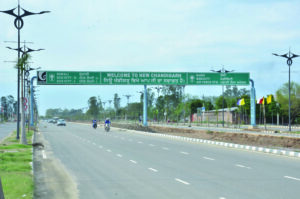 Having spent years explaining New Chandigarh’s potential when little existed beyond drawings and master plans, Sharma now finds himself witnessing those predictions materialise. The roads are wider, the infrastructure is visible and the city is steadily evolving into the destination early believers imagined.
For a professional who has spent nearly two decades building trust, guiding buyers and championing planned development across Punjab, the transformation carries a deeper significance. It is proof that vision, patience and execution eventually meet. Today, as Vice President Sales at Opus One by GB Realty, Sharma remains focused on helping shape the next chapter of that story. For him, New Chandigarh is no longer a vision waiting to be realised. It is a city coming into its own, and one he believes is poised to become one of North India’s most compelling urban success stories.