
For nearly seven decades, Chandigarh has represented an idea of India that was ahead of its time. Conceived by Le Corbusier as a modernist experiment in urban planning, the city became synonymous with architectural discipline, expansive boulevards, landscaped gardens and an enviable quality of life. Sukhna Lake, the Capitol Complex, Sector 17 and its meticulously organised neighbourhoods became defining elements of its identity. Functional, aesthetically distinctive and remarkably well planned, Chandigarh earned its reputation as the City Beautiful. Yet, for much of its existence, its identity remained rooted in governance, administration, and residential comfort rather than commercial ambition. Today, that narrative is undergoing a remarkable transformation. Chandigarh is no longer merely a city people aspire to live in; it is increasingly becoming a destination where they aspire to experience a more elevated way of life.
The emergence of the Chandigarh Tricity as an economic and lifestyle destination reflects a larger shift in India’s urban landscape. As metropolitan markets become increasingly saturated, affluent consumers and businesses are looking towards cities that offer a compelling combination of infrastructure, accessibility, economic opportunity and quality of life. Chandigarh, together with Mohali and Panchkula, occupies a distinctive position in this transition. Its established entrepreneurial ecosystem, expanding commercial infrastructure, educational institutions, healthcare facilities and proximity to major northern markets make it an attractive proposition for both investors and end-users. The region is gradually moving beyond its identity as an administrative centre towards becoming an important consumption, investment, and business hub.
One of the strongest catalysts behind this transformation is New Chandigarh. Located on the northern periphery of the existing city, in the vicinity of the Shivalik foothills, this emerging urban destination represents a new chapter in the region’s development. Planned as an integrated township, New Chandigarh is envisioned around residential communities, healthcare, education, recreation and commercial activity. Unlike conventional urban expansion, its planning places considerable emphasis on green spaces, organised road networks, and the integration of residential and institutional infrastructure. Its proximity to Chandigarh and Panchkula, alongside its connectivity with Mohali and other regional corridors, gives it an important geographical advantage. The Greater Mohali Area Development Authority’s development plans also identify dedicated zones for healthcare, education, recreation and mixed-use development, laying the groundwork for a more comprehensive urban ecosystem.
Healthcare infrastructure is expected to be a particularly significant contributor to this evolution. The proposed Medicity, conceived as a dedicated healthcare zone, reflects the ambition to establish New Chandigarh as a centre for advanced medical services, research and associated institutional development. Alongside the region’s established medical institutions, such developments have the potential to attract healthcare professionals, specialists, researchers, entrepreneurs, and associated service industries. The presence of a strong healthcare ecosystem does more than strengthen a city’s institutional importance; it generates employment, encourages residential demand, and creates opportunities for hospitality, retail and supporting businesses. Similarly, the planned Education City adds another dimension to the region’s long-term economic proposition.
The economic landscape is also becoming increasingly diversified. Chandigarh and Mohali have developed a growing presence in information technology, business services, education, professional consulting, and other service-oriented industries. Mohali’s IT City and expanding commercial districts have contributed to a broader employment ecosystem, attracting skilled professionals and businesses looking beyond traditional metropolitan locations. This growth has implications that extend well beyond office spaces and corporate campuses. An expanding professional population creates demand for premium housing, lifestyle amenities, restaurants, entertainment, wellness facilities and contemporary retail experiences. In this sense, economic growth and luxury consumption are not separate developments; they are increasingly interconnected elements of the same urban transformation.
Connectivity further strengthens the region’s appeal. Chandigarh’s established road network, its proximity to Mohali and Panchkula, access to the international airport and connections to important destinations across Punjab, Haryana and Himachal Pradesh make the Tricity a strategically positioned urban centre. For residents, this translates into access to employment, education, healthcare, and leisure destinations without necessarily compromising residential comfort. For businesses and investors, it offers the advantage of operating within a region that connects multiple economic and consumption centres. New Chandigarh’s position near the existing urban framework also allows it to benefit from the established infrastructure of the wider Tricity while developing its own identity.
The implications for the real estate market are particularly noteworthy. The Chandigarh Tricity has emerged as one of North India’s increasingly sought-after residential markets, with premium housing demand extending beyond the established sectors of Chandigarh into Mohali, Panchkula and New Chandigarh. A CII-Knight Frank report, reported by The Indian Express in 2026, identified the Tricity among eleven emerging real estate markets expected to contribute to India’s next phase of property growth. Its residential pricing also places it among the more expensive markets in this emerging city category. The growing interest reflects a combination of limited availability in established Chandigarh, infrastructure development, increasing purchasing power and demand from entrepreneurs, professionals and the NRI community. The region is no longer being evaluated exclusively as an alternative to metropolitan housing; it is increasingly developing a premium residential identity of its own.
Within this changing landscape, the expectations associated with luxury residences are evolving. The contemporary homebuyer is looking beyond square footage and conventional notions of opulence. Architecture, spatial planning, privacy, landscaping, sustainability, and hospitality-inspired amenities are becoming central to the definition of a premium residential experience. A residence is increasingly expected to offer the sensibilities of a private retreat while retaining the convenience of an interconnected urban lifestyle. This changing preference has created opportunities for developments that bring together international design thinking, high-end architecture, and a more considered approach to everyday living.
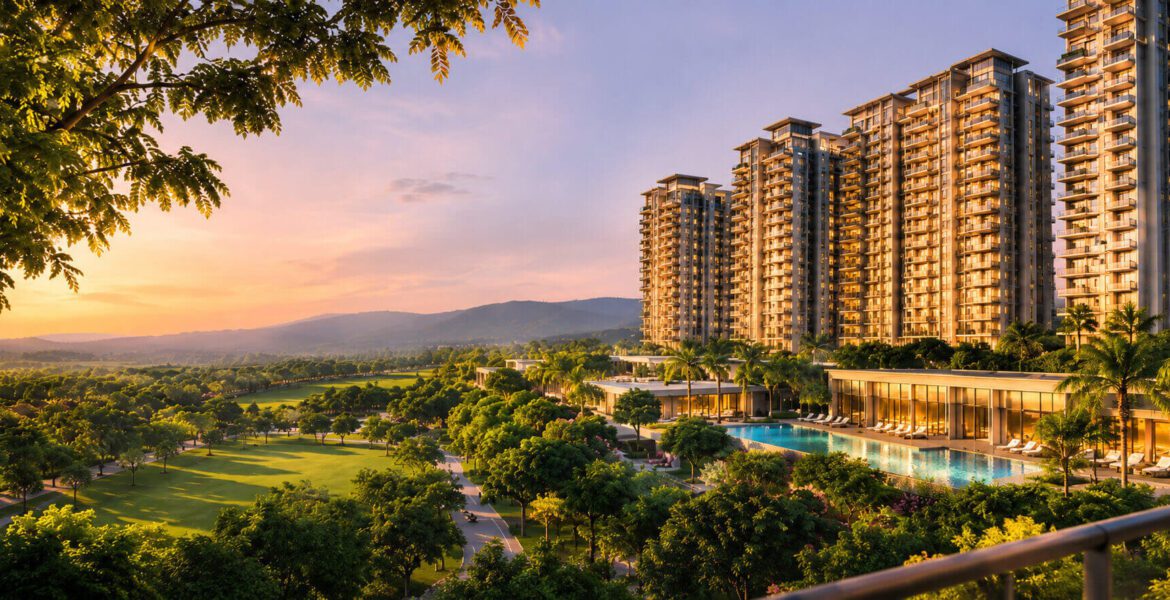
One such expression of this evolving residential ambition is Opus One by GB Realty in New Chandigarh. Rising as a 32-storey high-rise residential development, Opus One seeks to bring together high-end architecture and premium, hospitality-style living within the region’s emerging luxury landscape. Its proposition reflects a broader change in how affluent homebuyers are approaching residential spaces: the desire for an address that offers more than an impressive structure, one that considers the experience of living within it. As New Chandigarh develops into a more prominent residential destination, projects such as Opus One represent the growing ambition to introduce internationally benchmarked architectural and lifestyle experiences to North India. Its emergence also reflects a shift in the regional real estate conversation, where luxury is increasingly being defined by design, experience and the quality of the environment rather than by size or location alone.
The cultural dimension of this transformation is equally compelling. The Punjabi consumer has traditionally demonstrated an affinity for quality, entrepreneurship and an expansive approach to hospitality. A significant NRI population, international business connections and generations of overseas exposure have created a consumer base that is familiar with global luxury brands, international travel and premium lifestyle experiences. What is changing is the desire to access these experiences within the region itself. From luxury automobiles and designer fashion to fine dining, premium hospitality, wellness and high-end residential developments, the appetite for a more sophisticated lifestyle is becoming increasingly visible. Chandigarh is particularly well positioned to accommodate this evolution because its identity already combines cultural confidence with an appreciation for space, aesthetics, and quality of life.
Nevertheless, the transition from an emerging luxury market to an established lifestyle destination requires more than premium residential projects and international brand associations. It demands a consistent ecosystem of hospitality, retail, entertainment, infrastructure, and professional services. Employment generation must keep pace with development, public infrastructure must evolve alongside private investment, and environmental preservation must remain central to urban planning. New Chandigarh’s long-term success will depend on how effectively its planned infrastructure translates into a vibrant, self-sustaining urban environment. Its greatest opportunity lies in balancing expansion with the qualities that have historically made the region desirable.
Perhaps Chandigarh’s most compelling proposition is that it does not need to imitate India’s larger metropolitan cities to establish its place on the luxury map. Its appeal lies in offering a different interpretation of affluence: one that combines architectural distinction with open spaces, global influences with regional character, and contemporary living with a more measured urban rhythm. The emergence of New Chandigarh, the expansion of healthcare and technology infrastructure, the growing professional population, and the arrival of ambitious residential developments are collectively reshaping the region’s aspirations.
The City Beautiful is entering a new era, one in which its legacy of thoughtful urban planning meets the ambitions of a globally connected, increasingly affluent India. And as New Chandigarh begins to take shape, the definition of luxury in the region is being rewritten. The next prestigious address may not simply be defined by where it stands, but by the world of experiences it brings within reach. Chandigarh’s transformation is no longer just about building a bigger city; it is about creating a more elevated way of living.