
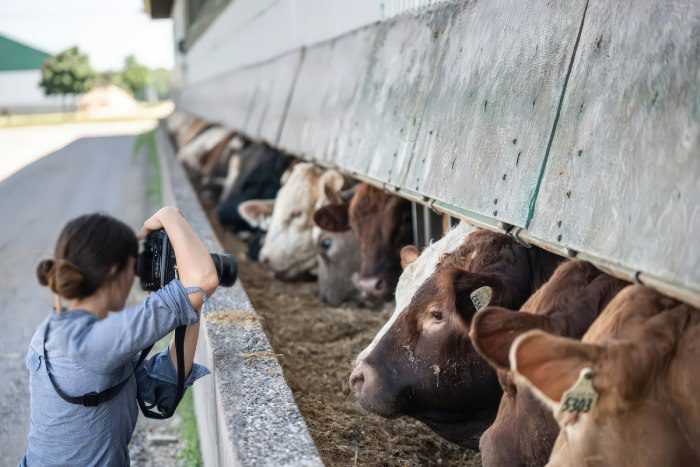
What if the world had never seen footage from inside factory farms? What if consumers relied solely on glossy advertisements, carefully crafted industry narratives and idyllic images of life on the farm? The conversation surrounding animal welfare would look remarkably different. Much of what society understands today about modern animal agriculture has emerged not from corporate transparency, but from the courageous work of independent investigators who have ventured behind closed doors to document realities that would otherwise remain hidden. In an era where information is abundant yet truth can still be obscured, investigative reporting has become one of the most powerful tools in the fight for animal protection. At the heart of this global effort stands ROA, an organisation dedicated to supporting the journalists, investigators and undercover reporters whose work forms the backbone of the animal welfare movement.
The modern agricultural industry is vast, sophisticated and deeply interconnected. Across continents, millions of animals are raised, transported and processed within systems that remain largely invisible to the public. For most consumers, the journey of animal products begins and ends at the supermarket shelf. The spaces in between, where animals spend the entirety of their lives, are rarely seen. This disconnect has created a significant gulf between public perception and reality. While industry communications frequently highlight welfare commitments and ethical practices, independent investigations often reveal a far more complex picture. The importance of uncovering these realities cannot be overstated. Without investigative reporting, much of the information that informs public debate, legislative reform and advocacy campaigns would simply not exist.
Throughout history, some of the most influential developments in animal welfare have been driven by evidence gathered through undercover investigations. Images and footage documenting overcrowded conditions, inhumane handling practices and systemic neglect have transformed public understanding and prompted meaningful conversations about ethics, accountability and reform. Such investigations do more than expose isolated incidents. They provide a window into systems that are otherwise inaccessible, allowing society to make informed decisions based upon evidence rather than assumption. In many cases, a single investigation has the power to alter public opinion, influence policymakers and encourage corporations to reassess their practices. The camera, in these circumstances, becomes far more than a recording device. It becomes an instrument of transparency and a catalyst for change.
Yet the individuals responsible for gathering this evidence often remain unseen. Investigative reporters working within the field of animal welfare occupy a unique and demanding position. Their work frequently requires extensive travel, covert operations, meticulous planning and extraordinary patience. Many spend weeks or months documenting conditions before a story reaches the public domain. The environments in which they operate can be physically challenging, emotionally taxing and, at times, potentially dangerous. Unlike traditional journalists who may work within established newsrooms, many animal welfare investigators operate independently or within small organisations, often with limited resources and support. Their contribution is indispensable, yet the challenges they face are rarely acknowledged.
This is where ROA has established a vital role. Recognising the immense value of investigative reporting within the animal protection movement, the organisation exists to support those who dedicate their lives to uncovering instances of animal cruelty. Through a range of initiatives that include professional assistance, education, networking opportunities and community-building efforts, the organisation seeks to ensure that investigators are equipped not only to continue their work but to thrive while doing so. Its mission extends beyond simply facilitating investigations. It aims to create a global support network for a profession that has long operated in relative isolation.
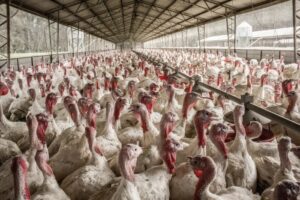
 The significance of such support becomes increasingly apparent when considering the emotional burden associated with investigative reporting. Witnessing animal suffering on a regular basis can have profound psychological consequences. Investigators often spend prolonged periods documenting conditions that many people would struggle to endure even briefly. They encounter distressing scenes of confinement, neglect and cruelty. Repeated exposure to such realities can lead to compassion fatigue, secondary trauma and burnout. The emotional impact is compounded by the fact that many investigators work alone, unable to openly discuss ongoing operations due to confidentiality concerns or security considerations. Over time, this isolation can take a significant toll on mental wellbeing.
Despite these challenges, investigators continue to play an essential role within the broader animal protection movement. Advocacy campaigns, legislative initiatives and public awareness efforts all depend upon credible evidence. Campaigners seeking to influence policy require documented proof of welfare violations. Journalists reporting on industry practices rely upon verified footage and firsthand accounts. Consumers looking to make informed choices often turn to investigative reports for insight into production systems. In this sense, investigators serve as the foundation upon which much of the animal welfare movement is built. Their work transforms concern into action by providing the evidence necessary to support meaningful change.
ROA understands that sustaining this work requires more than passion alone. Effective advocacy depends upon resilient, supported and well-connected individuals. By creating opportunities for collaboration and professional development, the organisation helps investigators navigate the unique challenges associated with their profession. Networking initiatives allow reporters from different countries and backgrounds to share knowledge, exchange experiences and learn from one another. Educational programmes provide guidance on investigative techniques, security practices and professional wellbeing. These resources strengthen the investigative community while helping to ensure that valuable expertise is preserved and shared across generations of advocates.
The organisation’s global perspective is particularly significant in an increasingly interconnected world. Animal agriculture is a multinational industry, with supply chains that span continents and influence markets far beyond national borders. Welfare concerns arising in one region may have implications for consumers and corporations elsewhere. As a result, effective investigative reporting often requires international cooperation and information sharing. ROA facilitates these connections, helping investigators collaborate across geographical boundaries and build a more comprehensive understanding of global animal welfare issues. By fostering a worldwide network of reporters, the organisation enhances the collective capacity of the movement to identify, document and address instances of cruelty wherever they occur.
Central to this mission are the founders, Kareena and Harry, whose dedication to animal welfare and investigative reporting has shaped the organisation’s vision. Kareena, in particular, brings more than a decade of experience within the animal welfare movement. Her journey began in Berlin, where she helped establish an international advocacy group and led volunteer coordination efforts. This early work provided valuable insight into the dynamics of grassroots activism and organisational development. Following her move to Australia in 2017, she expanded her focus to include freelance project management and the documentation of factory farming practices throughout Asia and Latin America. Through these experiences, she gained a deep understanding of both the practical realities of investigations and the personal challenges faced by those conducting them.
What distinguishes Kareena’s approach is her commitment not only to advancing animal welfare but also to promoting healthy and sustainable working environments. This interest formed the basis of her Master’s thesis and remains a guiding principle within ROA. The organisation recognises that meaningful change depends upon the wellbeing of those working to achieve it. Investigators cannot continue exposing cruelty if they are overwhelmed by exhaustion, isolation or emotional distress. By prioritising professional support and mental wellbeing alongside investigative excellence, the organisation adopts a holistic approach that strengthens both individuals and the broader movement.
The importance of this philosophy becomes increasingly evident as public awareness of animal welfare continues to grow. Consumers are becoming more conscious of the ethical implications of their purchasing decisions. Governments are facing increased pressure to address welfare concerns through legislation and regulation. Investors are paying closer attention to environmental, social and governance factors, including animal welfare standards. In this evolving landscape, the demand for credible, independent reporting is greater than ever. Society requires reliable information to navigate complex ethical questions and evaluate competing claims. Investigators provide that information by documenting realities that would otherwise remain hidden.
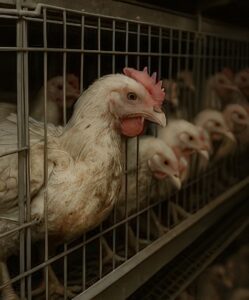
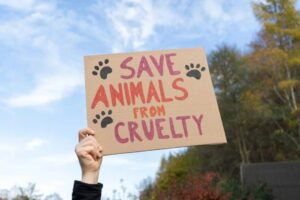 Their work is not merely an act of exposure. It is an act of accountability. By bringing transparency to opaque systems, investigative reporters enable informed public discourse and encourage institutions to uphold higher standards. They remind industries that public trust must be earned through genuine accountability rather than carefully managed appearances. They ensure that conversations about animal welfare are grounded in evidence rather than speculation. Most importantly, they give visibility to beings who have no ability to advocate for themselves.
Animals cannot speak to journalists, submit testimony or challenge the conditions in which they are kept. Their experiences would remain largely invisible were it not for the individuals willing to document them. Investigators serve as witnesses, translating hidden realities into evidence that can be understood, shared and acted upon. Their cameras become tools of representation, capturing stories that might otherwise go untold. Through their efforts, the suffering of animals is transformed from an abstract concept into a tangible reality that demands attention.
As the world continues to grapple with questions surrounding food production, sustainability and ethics, the role of investigative reporting will remain indispensable. Technological advancements may introduce new methods of documentation and communication, but the fundamental need for independent evidence will endure. Transparency remains essential to accountability, and accountability remains essential to progress. ROA recognises this truth and has committed itself to supporting those who dedicate their lives to uncovering it.
In many respects, the organisation’s mission extends beyond animal welfare alone. It represents a broader commitment to truth, transparency and informed public discourse. By empowering investigators and ensuring that they do not face their challenges alone, ROA strengthens one of the most important mechanisms through which societies hold powerful systems accountable. Its work is a reminder that meaningful change often begins with a simple but courageous act: the willingness to look where others choose not to and to reveal what others would rather keep hidden.
In a world increasingly shaped by competing narratives, the value of independent reporting cannot be underestimated. It is through the dedication of investigators, supported by organisations such as Kareena & Harry that hidden realities come to light and the possibility of change emerges. Their work challenges complacency, inspires dialogue and encourages accountability. Above all, it ensures that the voices of the voiceless are not forgotten, even when they cannot speak for themselves.
Report by Manokriti Bedi